

Vaginal Dryness During Menopause
Meta Description: Understand why vaginal dryness during menopause occurs and explore effective treatments, from moisturizing therapies to low-dose estrogen and laser [...]
Read MoreSide sleeping with a pillow between the knees keeps the spine aligned and reduces pressure on the sciatic nerve
Back sleeping with elevated knees opens space in the lower spine and decreases nerve compression
Stomach sleeping flattens the spine's natural curve and typically worsens sciatica symptoms
A medium to medium-firm mattress provides the best balance of support and comfort for most people with sciatic pain
Gentle stretching and heat therapy before bed can significantly reduce nighttime nerve tension
Persistent sleep disruptions from sciatica warrant consultation with a healthcare provider
Sciatica affects between 10% and 40% of people at some point in their lives, yet only about 1% to 5% of adults experience true sciatica annually. That shooting pain running from the lower back through the buttocks and down the leg can turn bedtime into a dreaded experience. Finding the best sleeping positions for sciatica relief becomes essential for anyone dealing with this condition.
The sciatic nerve is the longest nerve in the body, and when it becomes compressed or irritated, every position feels wrong. Sleep deprivation compounds the problem because the body heals and repairs tissue during rest. Without quality sleep, inflammation increases, pain sensitivity rises, and recovery slows dramatically. The good news is that specific sleeping positions can take pressure off this nerve and help people finally get the rest they need.
Maintaining proper spinal alignment is crucial for managing sciatica pain while sleeping. When the spine twists or bends unnaturally during sleep, the spaces where nerve roots exit the spinal column narrow. This narrowing puts direct pressure on the sciatic nerve, triggering pain, numbness, or tingling sensations.
The lumbar spine has a natural inward curve. Sleeping positions that flatten or exaggerate this curve create problems. A neutral spine position keeps the vertebrae stacked properly and maintains adequate space for the nerve roots.
During the day, movement keeps muscles warm and blood flowing. At night, muscles cool down and stiffen. People also tend to stay in one position for hours, which can build pressure on sensitive areas. The lack of distraction makes pain more noticeable, too. Many people report that their worst sciatica flares occur between midnight and 4 AM, when the body is at its lowest level of activity.
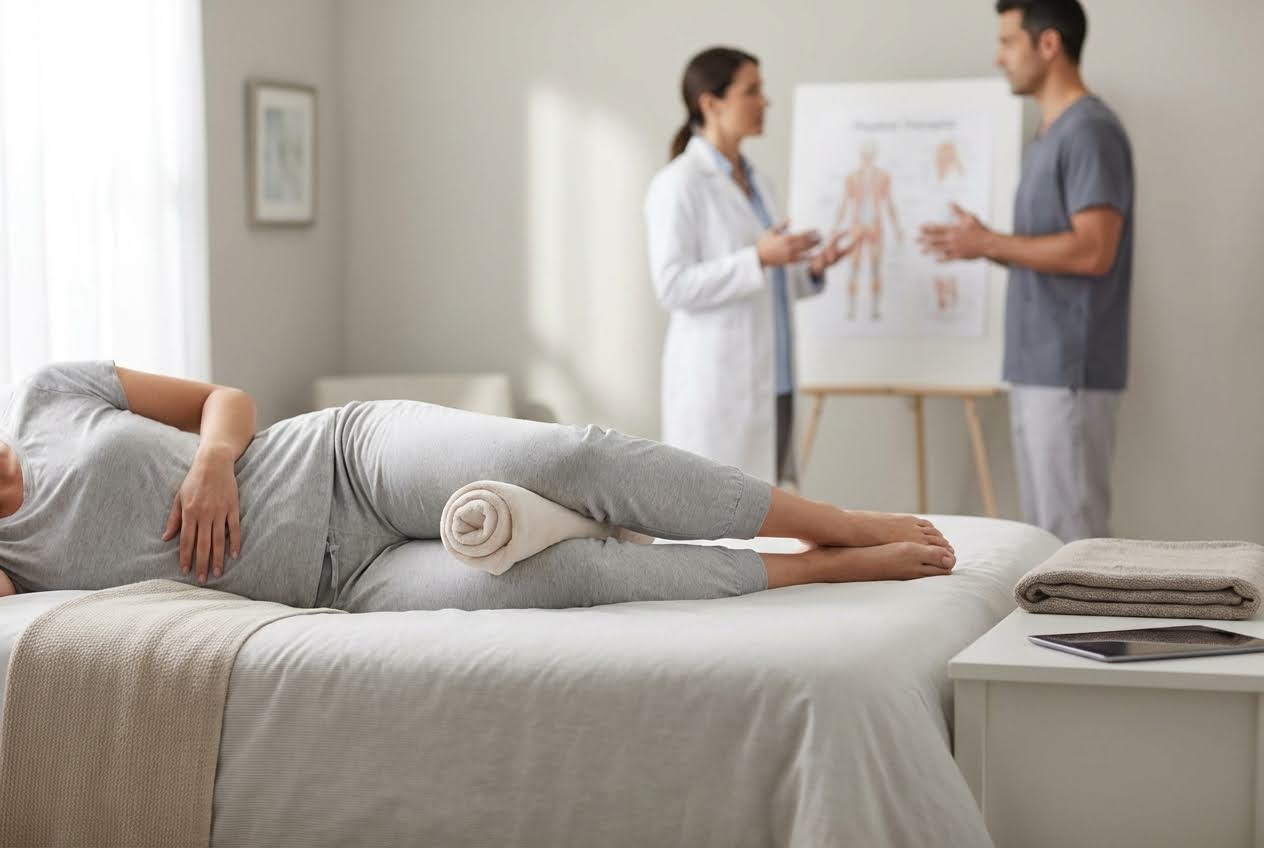 Top Recommended Sleeping Positions for Relief
Side sleeping ranks as the most effective position for most sciatica sufferers. The key is placing a firm pillow between the knees. This simple addition keeps the hips level and prevents the top leg from pulling the spine out of alignment. Without the pillow, the top knee drops forward, rotating the pelvis and compressing the nerve.
Choose the side that feels most comfortable. Some people find relief by sleeping on the painful side, as it opens space on the affected nerve root. Others prefer the opposite side. Experimentation determines what works best for each individual.
Back sleeping works well when done correctly. Place a pillow or rolled towel under the knees to create a slight bend. This position tilts the pelvis backward and opens the spaces between vertebrae where nerve roots exit. The result is less compression and less pain.
A small lumbar roll under the lower back adds extra support for some people. The goal is to maintain that natural spinal curve without forcing it.
People with foraminal stenosis, a narrowing of the nerve exit channels, often benefit from the fetal position. Curling up on one side with knees drawn toward the chest opens the posterior spine and creates more room for compressed nerves. This position should feel comfortable, not forced. Extreme curling can strain muscles and cause new problems.
Sleeping on the stomach is generally not recommended for people with sciatica. This position flattens the spine's natural curvature and puts unnecessary strain on muscles and joints. The neck must turn to one side for breathing, which creates additional spinal stress that radiates downward.
For committed stomach sleepers, placing a thin pillow under the pelvis can reduce some strain. Removing the head pillow entirely also helps keep the spine more neutral. These modifications help, but side or back sleeping remains preferable.
Twisting during sleep creates shearing forces on spinal discs. This stress can worsen disc bulges or herniations that may be causing the sciatica. Common problematic positions include sleeping with one leg bent and the other straight, or having the upper body facing a different direction from the hips.
Body pillows help prevent unconscious twisting by providing something to hold onto during sleep. They keep the body in a more stable position throughout the night.
A medium to medium-firm mattress provides the best support for most people with sciatica. Too-soft mattresses allow the body to sink unevenly, creating spinal misalignment. Too firm creates pressure points at the hips and shoulders, causing discomfort and requiring position changes.
Mattress toppers offer an affordable way to adjust firmness without replacing the entire mattress. Memory foam toppers conform to body contours while maintaining support.
Body pillows serve multiple purposes in relieving sciatica. They support the top arm and leg during side sleeping, prevent rolling onto the stomach, and provide something comfortable to hold. Full-length body pillows work best because they support the entire body.
Lumbar rolls fit in the small of the back when sleeping on the back. They maintain the natural curve and prevent the lower back from flattening against the mattress.
A 10-minute stretching routine before bed loosens tight muscles that may be compressing the sciatic nerve. Effective stretches include the piriformis stretch, knee-to-chest stretch, and seated spinal twist. These movements should be gentle and pain-free.
Nerve gliding exercises help the sciatic nerve move freely through surrounding tissues. The seated sciatic nerve glide involves extending one leg while flexing and pointing the foot. These exercises reduce nerve sensitivity over time.
Heat relaxes muscles and increases blood flow, making it ideal before sleep. A heating pad applied to the lower back for 15-20 minutes prepares the body for rest. Heat also has a calming effect that promotes sleep.
Cold therapy reduces inflammation, but it can be too stimulating before bed. Reserve ice packs for acute flare-ups during the day. If inflammation is severe, a brief cold application followed by heat can provide relief without disrupting sleep.
Sleep disruption lasting more than two weeks despite position changes warrants professional evaluation. Doctronic offers convenient access to healthcare providers who can assess symptoms and recommend treatment options. Warning signs that require immediate attention include loss of bladder or bowel control, progressive weakness in the leg, or numbness in the groin area.
Chronic sciatica may require imaging studies to identify the underlying cause. Treatment options range from physical therapy and medications to injections and surgery in severe cases. Early intervention typically leads to better outcomes.
Side sleeping with a pillow between the knees works best for most people. This position maintains spinal alignment and reduces pressure on the sciatic nerve.
Yes. A mattress that is too soft or too firm creates spinal misalignment and pressure points that aggravate sciatic nerve compression.
Ten to fifteen minutes of gentle stretching is sufficient. The routine should feel relaxing, not strenuous.
Heat works better before sleep because it relaxes muscles without being overly stimulating. Save ice for daytime inflammation management.
Seek medical attention if symptoms persist beyond two weeks, worsen progressively, or include bladder or bowel changes.
Finding the right sleeping position for sciatica can dramatically improve both pain levels and sleep quality. Side-sleeping with a knee pillow or back-sleeping with the knees elevated helps keep the spine aligned and reduces pressure on the sciatic nerve. For ongoing concerns about sciatica or other health issues, Doctronic provides free AI doctor visits and affordable telehealth consultations 24/7 in all 50 states.
Meta Description: Understand why vaginal dryness during menopause occurs and explore effective treatments, from moisturizing therapies to low-dose estrogen and laser [...]
Read MoreMeta Description: Discover why perimenopause causes itching and explore effective relief strategies, from hormone therapy to skincare tips, to soothe dry and itchy skin.When [...]
Read MoreMeta Description: Understand why weight gain during perimenopause occurs and learn how to manage it through protein intake, resistance training, and better sleep habits.Why [...]
Read More