

Vaginal Dryness During Menopause
Meta Description: Understand why vaginal dryness during menopause occurs and explore effective treatments, from moisturizing therapies to low-dose estrogen and laser [...]
Read MoreSide sleeping with a pillow between the knees is the most popular position for lower back pain relief, preferred by approximately 60% of chronic pain sufferers
Back sleeping with knee elevation maintains the spine's natural curve and distributes weight evenly
Mattress firmness and pillow selection directly impact spinal alignment during sleep
Pre-sleep stretching and proper bed entry techniques speed overnight recovery
Persistent pain lasting more than six weeks requires professional evaluation
Lower back pain affects over 620 million people worldwide as of 2025. Most people spend seven to nine hours in bed each night. That means sleep position can either heal or harm the lower back for a third of every day. The best sleeping position for lower back pain keeps the spine aligned and muscles relaxed.
Many people wake up stiff and sore without knowing why. The answer often lies in how they slept. A twisted spine or unsupported curve puts stress on muscles, discs, and joints for hours. The good news: simple changes to sleep position can bring real relief. Doctronic.ai helps users understand their pain and find solutions through free AI doctor visits available anytime.
The spine has three natural curves: at the neck, mid-back, and lower back. When someone sleeps in a position that flattens or exaggerates these curves, muscles work overtime to compensate. This leads to tension, inflammation, and pain that builds throughout the night.
Sleeping flat on the stomach forces the lower back into an unnatural arch. Sleeping on the side without support lets the top leg pull the pelvis forward. Both scenarios strain the ligaments and small muscles that stabilize the spine. Over time, this nightly stress can turn occasional discomfort into chronic pain.
A neutral spine keeps the lower back in its natural, slight inward curve. This position distributes body weight evenly across the spine's structures. Discs stay hydrated and cushioned. Muscles can fully relax.
Back pain and sleeping position are definitely connected. The best options keep your spine supported and aligned, like sleeping on your back with a pillow under your knees or on your side with a pillow between your knees.
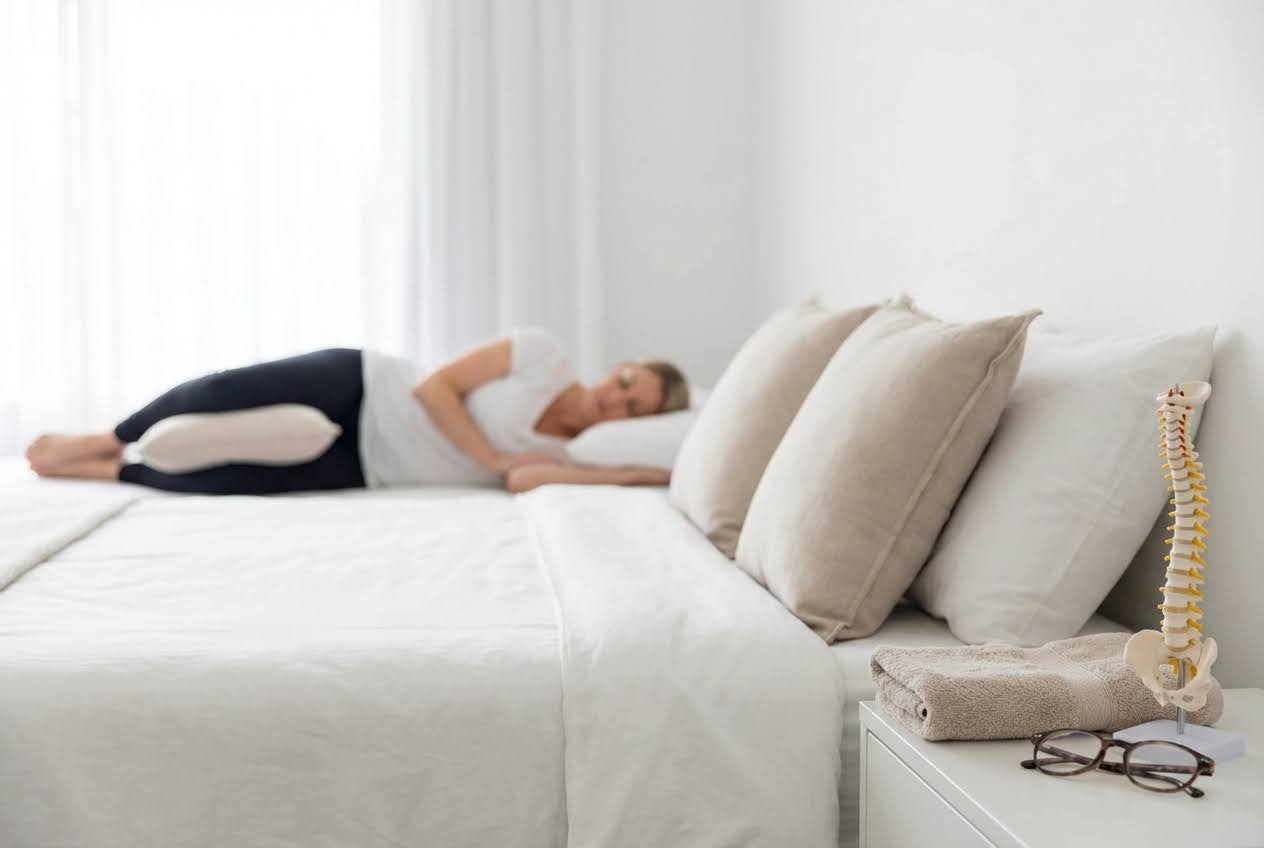 Top Recommended Sleeping Positions for Relief
A study of 375 patients with chronic low back pain found that around two-thirds preferred side-lying. This position works well because it keeps the spine relatively straight when done correctly. The key is placing a firm pillow between the knees.
Without the pillow, the top leg drops down and rotates the pelvis. This twists the lower spine and strains the sacroiliac joint. A pillow keeps the hips stacked and the spine neutral. People should draw their knees up slightly toward their chest for extra relief.
Sleeping on the back with a pillow under the knees is often the best position for relieving lower back pain. This setup maintains the spine's natural curve while taking pressure off the lower back. The pillow should be thick enough to create a slight bend in the knees.
This position works because it prevents the pelvis from tilting forward. When someone lies flat on their back, the lower spine can arch too much. The pillow under the knees flattens this arch just enough to relieve pressure on the lumbar discs and joints.
People with herniated or bulging discs often find comfort in a modified fetal position. Lying on the side with knees drawn toward the chest opens space between the vertebrae. This reduces pressure on the discs and nerves.
The trick is not curling too tightly. An extreme fetal position can round the lower back too much. A gentle curl with a pillow between the knees provides the benefits without creating new problems.
Stomach sleeping is generally the worst position for lower back pain. It forces the spine into extension and often requires turning the head to one side. Most experts recommend switching to side or back sleeping.
For those who cannot break the habit, placing a thin pillow under the pelvis helps. This reduces the arch in the lower back. Using a flat pillow for the head, or no pillow at all, keeps the neck in better alignment. These adjustments minimize damage while someone works toward a better sleep position.
Mattress choice matters more than most people realize. A mattress that is too soft lets the hips sink, curving the spine unnaturally. A mattress that is too firm creates pressure points at the hips and shoulders.
Medium-firm mattresses remain the most recommended by current (2025–2026) clinical guidelines for people with lower back pain. This firmness level supports the body's weight while allowing enough give at pressure points. People should test mattresses in person when possible and take advantage of trial periods. Doctronic.ai can help users understand their specific pain patterns to guide mattress selection.
The right pillow keeps the neck aligned with the rest of the spine. Side sleepers need a thicker pillow to fill the space between their shoulders and heads. Back sleepers need a thinner pillow that supports the natural curve of the neck.
A small lumbar pillow can provide extra support for back sleepers. This fills the gap between the lower back and the mattress. Some people also benefit from a body pillow that provides support throughout the night without requiring adjustment.
Gentle stretching before bed prepares the muscles for sleep. Tight hip flexors and hamstrings pull on the pelvis and strain the lower back. A few minutes of stretching can release this tension.
Effective pre-sleep stretches include knee-to-chest pulls, gentle spinal twists, and child's pose. These movements should be slow and gentle, never forced. The goal is relaxation, not increased flexibility. Stretching also signals the body that sleep is coming, improving overall sleep quality.
Many people hurt their backs getting into or out of bed. The wrong movement can strain muscles or aggravate disc problems. Safe technique protects the back during these transitions.
To get into bed, sit on the edge and lower to the side while swinging the legs up together. To get out, roll onto the side, drop the legs off the edge, and push up with the arms. These movements keep the spine from twisting under load.
Back pain lasting more than 6 weeks needs professional attention. Pain that radiates down the leg, causes numbness, or is accompanied by weakness requires immediate evaluation. These symptoms can indicate nerve compression that needs treatment.
A doctor can identify the cause of persistent pain and recommend specific treatments. Physical therapy, medication, injections, or other interventions may be necessary. Doctronic.ai offers free AI doctor visits to help people understand their symptoms and decide when to seek in-person care. The platform also provides affordable telehealth visits with real doctors in all 50 states.
Most people notice some improvement within one to two weeks of consistent position changes. Full benefits may take four to six weeks as muscles adapt to the new alignment.
Yes. A mattress that does not support the spine properly can cause or worsen lower back pain. Mattresses typically lose support after about eight years, though this varies by material and quality.
Switching positions is normal and healthy. The body naturally moves during sleep. The goal is to start in a good position and make sure any position feels supported.
Body pillows can help side sleepers maintain alignment throughout the night. They provide consistent support without requiring adjustment when switching sides.
Work gradually toward better positions. Start by spending just part of the night in a new position. Use pillows to make the transition more comfortable.
Finding the best sleeping position for lower back pain starts with proper spinal alignment. Side sleeping with a pillow between the knees or back sleeping with knee elevation gives most people relief. For personalized guidance on managing back pain, visit Doctronic.ai for a free AI doctor consultation that can help determine next steps.
Meta Description: Understand why vaginal dryness during menopause occurs and explore effective treatments, from moisturizing therapies to low-dose estrogen and laser [...]
Read MoreMeta Description: Discover why perimenopause causes itching and explore effective relief strategies, from hormone therapy to skincare tips, to soothe dry and itchy skin.When [...]
Read MoreMeta Description: Understand why weight gain during perimenopause occurs and learn how to manage it through protein intake, resistance training, and better sleep habits.Why [...]
Read More