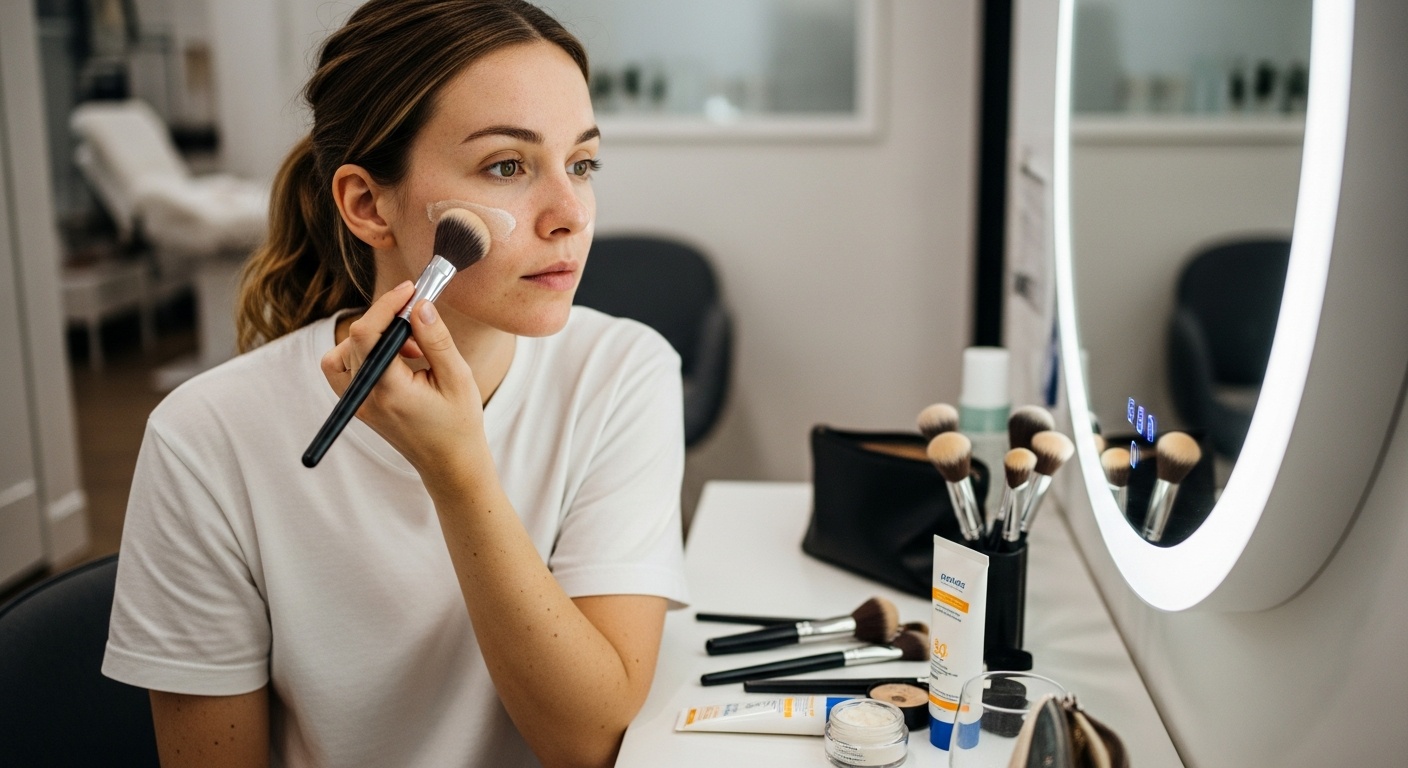
SPF in foundation provides inadequate protection because the thin application delivers only a fraction of the labeled SPF value
Chemical sunscreens absorb into skin and work best applied after moisturizer, while mineral formulas sit on top and should be applied last before makeup
Wait two to three minutes after sunscreen application before applying foundation to prevent pilling and product separation
Reapply sunscreen every two hours using powder SPF or setting sprays to maintain protection without disturbing makeup
Avoid titanium dioxide or zinc oxide in high concentrations if photographed frequently, as they can cause white flashback under flash photography
Get personalized sunscreen-under-makeup recommendations through Doctronic.ai telehealth consultations available 24/7
Why Sun Protection Matters More Than Your Foundation Claims
Finding sunscreens that work under makeup without pilling, leaving a white cast, or turning oily by noon feels impossible. Most people skip facial SPF entirely because their foundation "has SPF 15." This is a mistake that ages skin faster than almost any other skincare shortcut. The sun care market is shifting towards a year-round sun protection mindset, integrating sun protection into daily life for good reason. UV damage accumulates silently, causing wrinkles, dark spots, and texture changes that no foundation can hide. The right facial sunscreen actually improves makeup application by creating a smooth, primed surface. Doctronic.ai offers telehealth consultations where dermatology-focused providers can recommend specific products based on individual skin concerns and medication interactions.
The Importance of Sun Protection in Your Makeup Routine
Why SPF in Foundation Isn't Enough
Makeup should not be the only barrier against UV rays, as it is designed to enhance appearance rather than create a uniformly thin layer over the entire face. Foundation with SPF sounds convenient, but the math reveals the problem. SPF testing requires applying 2 milligrams of product per square centimeter of skin. Nobody applies foundation that thickly. A typical foundation application delivers roughly one-quarter of the labeled SPF protection. That SPF 30 foundation? It performs closer to SPF 7 in real-world use. Dedicated sunscreen applied at the correct amount provides reliable protection that makeup simply cannot match.
The Difference Between Chemical and Mineral Formulas Under Makeup
Chemical sunscreens contain ingredients like avobenzone and oxybenzone that absorb UV rays and convert them to heat. These formulas tend to be thinner, more transparent, and easier to layer under makeup. Mineral sunscreens use zinc oxide or titanium dioxide to physically block and reflect UV rays. They sit on the skin's surface rather than absorbing into it. Dermatologists note that chemical and physical sunscreen layering follows different rules: chemical sunscreens are generally applied after moisturizer, while physical sunscreens should be the last layer before makeup. This distinction matters for preventing pilling and achieving a smooth base.
Top-Rated Sunscreens for Different Skin Types
Oil-Free Options for Acne-Prone and Oily Skin
Oily and acne-prone skin needs sunscreens labeled non-comedogenic and oil-free. Look for mattifying formulas containing niacinamide, which controls sebum production while protecting skin. Gel-based chemical sunscreens absorb quickly without adding shine. Avoid heavy occlusive ingredients like coconut oil or cocoa butter that clog pores. Many effective options now include salicylic acid or tea tree extracts that treat breakouts while protecting. Doctronic.ai can help identify whether current acne medications increase sun sensitivity, making proper SPF selection even more critical.
Hydrating SPF Primers for Dry Skin
Dry skin benefits from sunscreens containing hyaluronic acid, glycerin, or ceramides. These ingredients attract and lock in moisture while providing UV protection. Cream-based mineral sunscreens often work well because zinc oxide has mild anti-inflammatory properties that soothe dry, irritated skin. Avoid sunscreens with high alcohol content, which strip moisture and cause flaking under makeup. Tinted moisturizers with SPF 30 or higher can serve double duty for those wanting minimal layers.
Invisible Finishes for Darker Skin Tones
Traditional mineral sunscreens leave white or grayish casts on medium to deep skin tones. Modern formulations solve this problem through micronized zinc oxide particles that blend invisibly. Tinted mineral sunscreens in universal shades adapt to various skin tones while providing protection. Chemical sunscreens naturally absorb without any cast, making them reliable choices for darker complexions. Iron oxide tints in some formulas also protect against visible light damage, which contributes to hyperpigmentation in melanin-rich skin.
Application Techniques for a Flawless Base
The 'Wait Time' Rule to Prevent Pilling
Pilling happens when products roll up into tiny balls on the skin instead of absorbing smoothly. The primary cause is applying makeup before sunscreen fully sets. Wait two to three minutes after sunscreen application before touching the face again. Chemical sunscreens need time to absorb into skin and form a protective film. Mineral sunscreens need time for the silicone base to set. Rushing this step guarantees frustration and wasted product.
Layering Order: Skincare, Sunscreen, and Foundation
The correct order depends on sunscreen type. For chemical sunscreens: cleanser, toner, serum, moisturizer, chemical sunscreen, primer, foundation. The sunscreen goes after moisturizer because it needs direct skin contact to absorb properly. For mineral sunscreens: cleanser, toner, serum, moisturizer, mineral sunscreen, foundation. The mineral formula acts as the final skincare step and first makeup step simultaneously. Mixing up this order reduces protection and causes makeup to slide or separate.
How to Reapply SPF Without Ruining Your Makeup
Experts recommend reapplying sunscreen every two hours for continuous protection. This presents obvious challenges when wearing a full face of makeup.
Sunscreen Powders and Setting Sprays
Powder sunscreens containing zinc oxide or titanium dioxide allow reapplication over makeup without disturbing it. Apply with a brush in light, even strokes across the face. SPF setting sprays offer another option, though coverage can be uneven if not applied carefully. Hold the spray eight to ten inches from the face and mist in a crossing pattern to ensure full coverage. Neither method replaces proper initial sunscreen application, but both maintain protection throughout the day.
Using a Beauty Sponge for Liquid Reapplication
For those preferring liquid sunscreen reapplication, a damp beauty sponge minimizes makeup disruption. Apply sunscreen to the sponge rather than directly to the face. Press and pat gently rather than dragging or rubbing. This technique works best with lightweight, fast-absorbing chemical formulas. Touch up concealer or powder afterward if needed. The extra effort pays off in maintained protection during long outdoor events.
Key Ingredients to Look for and Avoid
The Role of Silicones in Smoothing Texture
Silicones like dimethicone and cyclopentasiloxane create a smooth, blurred finish that helps makeup glide on evenly. They fill fine lines and pores temporarily, creating an airbrushed effect. Silicone-based sunscreens pair best with silicone-based primers and foundations. Mixing silicone products with water-based products causes separation and pilling. Check ingredient lists to ensure compatibility across all products in the routine.
Avoiding Flashback in Photography
Titanium dioxide and zinc oxide can reflect light, including camera flash. High concentrations of these minerals may cause "flashback," where the face appears white in flash photography. Those frequently photographed should choose chemical sunscreens or tinted mineral formulas that counteract this effect. Iron oxides in tinted sunscreens absorb light rather than reflecting it. Test any new sunscreen with flash photography before important events.
Frequently Asked Questions
Many sunscreens function as excellent primers, especially those with silicone bases. They smooth texture and help foundation adhere better. Dedicated primers offer specific benefits like color correction or pore minimization that sunscreens cannot provide.
SPF moisturizers provide protection only when applied at the correct thickness, which most people do not achieve. Treat SPF moisturizer as a bonus layer rather than primary protection. Apply dedicated sunscreen underneath for reliable coverage.
Protection degrades after approximately two hours of sun exposure or immediately after swimming or heavy sweating. Indoor exposure through windows still warrants reapplication for those near sunny windows for extended periods.
Yes, eyelid skin is thin and prone to sun damage and skin cancer. Use mineral sunscreens around eyes, as chemical formulas can sting. Apply carefully to avoid getting product in eyes.
The Bottom Line
Proper facial sunscreen protects skin from premature aging and damage while creating a better base for makeup application. For personalized recommendations on sun protection products that work with specific skin conditions or medications, Doctronic.ai offers convenient telehealth consultations with qualified providers available around the clock.
Understanding Emotional Wellness Through DBTEmotions feel overwhelming when they seem to control every decision. Dialectical Behavior Therapy offers practical techniques for [...]
Getting Skin Care Without the Insurance HeadachesThat suspicious mole has been bothering you for weeks. You want answers from a dermatologist, but a quick call to your [...]
Why Ankles Swell After Physical ActivityFinishing a workout with puffy, tight ankles can be alarming. Most people assume something is wrong, but bloated ankles after exercise [...]