

Vaginal Dryness During Menopause
Meta Description: Understand why vaginal dryness during menopause occurs and explore effective treatments, from moisturizing therapies to low-dose estrogen and laser [...]
Read MoreBack extension exercises target the erector spinae muscles, which are critical for spinal support and everyday movement
Regular training can reduce lower back pain by up to 25% and improve postural alignment
Proper form means avoiding excessive hyperextension of the lumbar spine and maintaining a neutral neck position
Equipment options range from hyperextension benches to simple floor-based movements anyone can do at home
Start with bodyweight movements before progressing to added resistance
Doctronic can help answer questions about back pain and exercise safety before you begin any new routine
Lower back pain affects a staggering 65-85% of adults at some point in their lives. That statistic alone explains why back extension exercises have become a staple in gyms, physical therapy clinics, and home workout routines worldwide. These movements strengthen the posterior chain muscles that support your spine during everything from picking up groceries to running a marathon. The benefits extend far beyond pain prevention: improved posture, better athletic performance, and a stronger core all come from consistent back extension training. Understanding proper technique and safety guidelines makes the difference between building a resilient back and creating new problems. This guide covers everything you need to know about back extensions, from muscle mechanics to safe progression strategies.
Back extensions work by moving your torso from a flexed position to an extended one against gravity. This simple movement pattern activates multiple muscle groups along your posterior chain. The primary movers and secondary supporters work together to create spinal stability and hip extension power.
The erector spinae is actually a group of three muscles running along both sides of your spine from your pelvis to your skull. These muscles handle spinal extension, lateral flexion, and rotation. During back extensions, they contract to lift your torso against gravity and control the lowering phase. Weak erector spinae muscles contribute to poor posture and increased injury risk during lifting activities. Strengthening these muscles creates a natural support system for your spine.
Your gluteus maximus and hamstrings assist significantly during back extension movements. The glutes activate to extend the hips, while the hamstrings work as synergists throughout the movement. This makes back extensions an effective posterior chain exercise rather than an isolation movement. People who sit for long periods often have weak glutes and hamstrings, making these secondary benefits particularly valuable for office workers.
Consistent back extension work delivers measurable improvements in daily function and athletic performance. The benefits compound over time as the supporting muscles grow stronger and more resilient.
Strong erector spinae muscles naturally pull your shoulders back and support an upright spine. This counteracts the forward-hunching posture that develops from desk work and phone use. Better posture reduces strain on spinal discs and ligaments throughout the day. Most people notice improved standing and sitting posture within four to six weeks of regular training.
Research shows that back extension exercises can help reduce lower back pain by up to 25% in some individuals. Stronger spinal muscles better absorb forces during lifting and bending movements. This protective effect becomes especially important as you age or engage in physically demanding activities. If you experience chronic back pain, consulting with a healthcare provider through Doctronic can help determine whether back extensions are appropriate for your situation.
Athletes rely on posterior chain strength for sprinting, jumping, and throwing movements. Back extensions build the foundation for explosive hip extension and rotational power. Runners, cyclists, and weightlifters all benefit from the stability these exercises provide. The carryover to compound movements like deadlifts and squats makes back extensions valuable for strength training programs.
 Common Variations and Equipment
Multiple equipment options exist for performing back extensions, each with distinct advantages. Your choice depends on the available equipment, your fitness level, and your specific training goals.
The 45-degree hyperextension bench positions your body at an angle, reducing the difficulty compared to parallel benches. Beginners should start here before progressing to more challenging variations. Parallel benches increase the range of motion and load on the spinal muscles. Both options provide added resistance by holding weight plates or dumbbells against your chest.
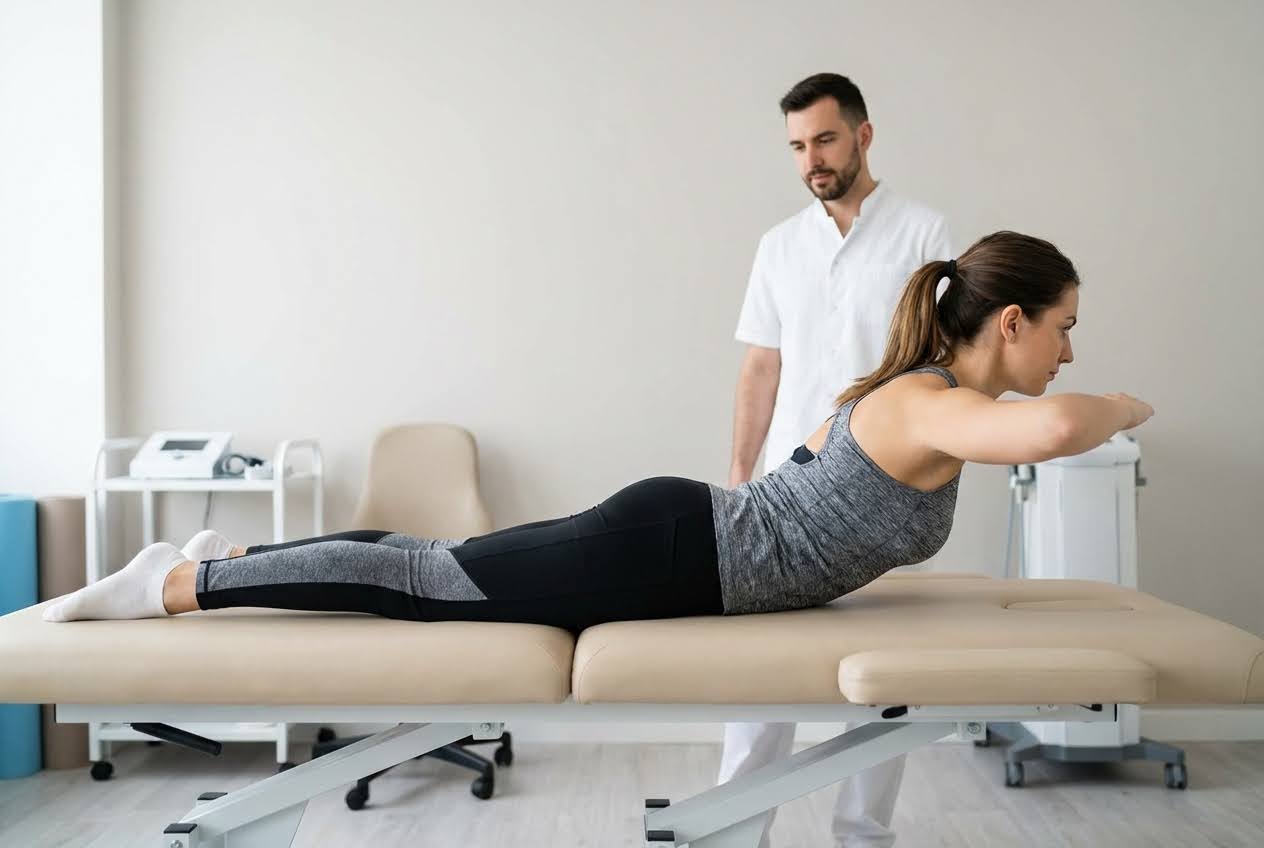
Floor extensions require no equipment and can be performed anywhere. The Superman exercise involves lying face down and lifting your arms and legs off the ground simultaneously. This variation works well for beginners and travelers without gym access. Hold the top position for two to three seconds to maximize muscle engagement.
Stability balls provide core stabilization during back extensions. Position your hips on the ball with your feet anchored against a wall for support. The unstable surface forces smaller stabilizer muscles to work harder. This variation suits people recovering from injuries who need a gentler approach.
Proper technique separates effective back extension training from potential injury. When performed correctly and consistently, back extension exercises can strengthen the muscles that support the spine, leading to improved posture and a reduced risk of injury.
The most common mistake is arching too far at the top of the movement. Your spine should form a straight line with your legs at full extension: not a dramatic backward curve. Excessive hyperextension compresses the spinal discs and stresses the facet joints. Stop the movement when your torso aligns with your legs.
Jerky, fast movements increase injury risk and reduce muscle engagement. Lower your torso for three seconds, pause briefly at the bottom, then raise for two seconds. This controlled tempo maximizes time under tension and builds strength through the full range of motion. Never bounce or use momentum to complete repetitions.
Keep your neck in line with your spine throughout the movement. Looking up or tucking your chin creates unnecessary cervical strain. Pick a spot on the floor a few feet ahead and maintain that gaze throughout your set. Your entire spine should move as one unit.
Strategic programming ensures you get maximum benefit without overtraining the spinal muscles.
Two to three sessions per week provide adequate stimulus for most people. Start with two sets of 10-15 repetitions and gradually increase volume. Allow at least 48 hours between sessions for muscle recovery. Back extensions work well as part of a warm-up or as an accessory movement after main lifts.
Master bodyweight extensions before adding external load. Hold a weight plate against your chest once you can complete three sets of 15 repetitions with perfect form. Increase weight in small increments of five to ten pounds. Resistance bands offer another progression option that allows for variable resistance throughout the movement.
Start with two sessions per week, allowing at least two days between workouts. Begin with two sets of 10 repetitions using bodyweight only. Increase frequency to three times weekly after four to six weeks of consistent training.
Back extensions may help some people with sciatica by strengthening supporting muscles, but they can worsen symptoms in others. Consult a healthcare provider before starting: Doctronic offers convenient access to medical guidance on exercise safety.
You should feel both muscle groups working. The lower back muscles handle spinal extension, while the glutes assist with hip extension. If you only feel one area, adjust your hip position on the pad or focus on squeezing both muscle groups at the top.
This depends entirely on the specific injury and healing stage. Some patients with herniated discs benefit from extension-based exercises, while others should avoid them. Get clearance from a medical professional before attempting back extensions with any spinal condition.
Back extensions move your torso while your legs stay fixed. Reverse hyperextensions keep your torso fixed while your legs move. Both target similar muscles but place different emphasis on and load the spine differently.
Back extension exercises build the posterior chain strength that protects your spine and improves athletic performance. Start with proper form, progress gradually, and listen to your body. For personalized guidance on whether back extensions are right for your health, visit Doctronic for fast, AI-powered medical insights available around the clock.
Meta Description: Understand why vaginal dryness during menopause occurs and explore effective treatments, from moisturizing therapies to low-dose estrogen and laser [...]
Read MoreMeta Description: Discover why perimenopause causes itching and explore effective relief strategies, from hormone therapy to skincare tips, to soothe dry and itchy skin.When [...]
Read MoreMeta Description: Understand why weight gain during perimenopause occurs and learn how to manage it through protein intake, resistance training, and better sleep habits.Why [...]
Read More