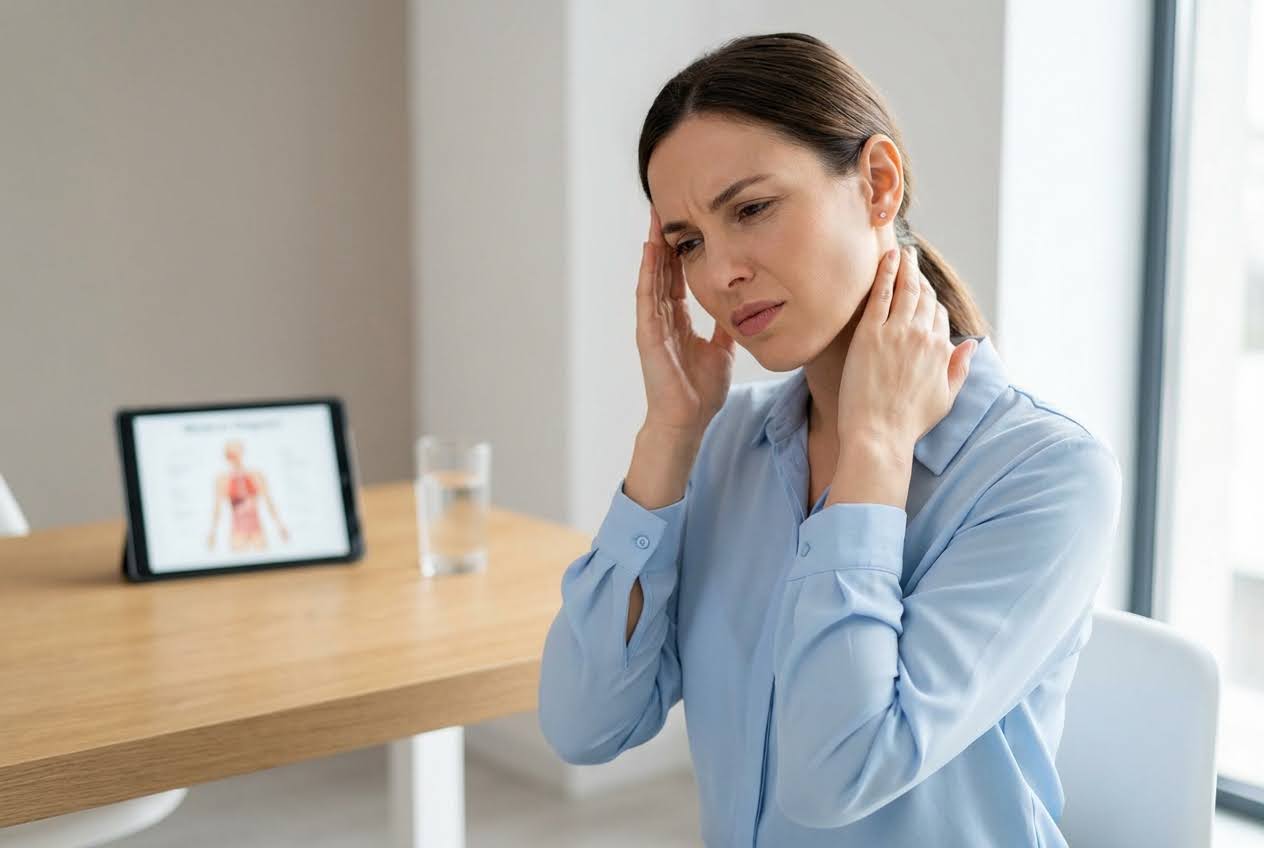
Neck stiffness and headaches often share the same source: tight muscles and compressed nerves in the cervical spine
More than 70% of people with migraines experience neck pain before, during, or after their headache
Cervicogenic headaches start in the neck but radiate pain to the head through referred nerve pathways
Red flags like fever with stiff neck, sudden severe headache, or neurological changes require immediate medical attention
Prevention through posture correction, regular movement, and ergonomic adjustments offers the best long-term relief
Finding Effective Relief Through Proper Evaluation
Waking up with a stiff neck and a pounding headache feels miserable. These two symptoms often occur together, so most people assume they are separate problems. The truth is more interesting: your neck and head share nerve pathways, muscle connections, and blood supply that create a direct link between cervical tension and head pain. Headache disorders affect about 50% of the global population, or roughly 4 billion people, as of 2024 estimates. When stiff neck and headache are explained together, the relationship becomes clear. Understanding this connection helps people find real relief rather than treating recurring symptoms. Doctronic.ai provides AI-powered consultations that help determine whether your symptoms require professional evaluation or respond well to home care.
The Connection Between Neck Tension and Head Pain
Anatomy of the Cervical Spine
The cervical spine contains seven vertebrae stacked from the base of the skull to the upper back. Between each vertebra sits a cushioning disc, and nerve roots branch out at every level. The upper cervical nerves, particularly C1 through C3, share connections with the trigeminal nerve system in the face and head. This anatomical overlap explains why neck problems create head symptoms.
How Muscle Tightness Triggers Referred Pain
Tight muscles in the neck and shoulders compress nerves and restrict blood flow. When the suboccipital muscles at the skull base become tense, they irritate nerve endings that send pain signals upward. With neck pain, the upper cervical nerves activate the trigeminal nerve and can trigger a migraine. This referred pain pattern indicates that the source of discomfort is in the neck, while the symptom appears in the head.
Common Causes of Co-occurring Neck Stiffness and Headaches
Cervicogenic Headaches
Cervicogenic headaches originate in the neck but radiate to one side of the head, face, or behind the eye. Poor posture, arthritis, or disc problems in the upper cervical spine typically cause them. The pain worsens with certain neck movements and often responds poorly to standard headache medications because the root problem sits in the spine, not the head.
Tension-Type Headaches and Posture
Hours spent hunched over phones and computers create chronic muscle tension in the neck, shoulders, and scalp. This sustained contraction reduces blood flow and irritates nerve endings. The resulting headache feels like a tight band around the head, accompanied by neck stiffness and shoulder pain. More than 70% of people with migraine experience neck pain before, during, or after the headache phase.
Occipital Neuralgia
This condition involves inflammation or injury to the occipital nerves running from the upper spine through the scalp. Sharp, shooting pain starts at the base of the skull and radiates upward. People describe it as electric shocks or stabbing sensations. The neck often feels extremely stiff and tender where the nerves exit the spine.
Whiplash and Physical Trauma
Car accidents, sports injuries, and falls can damage the soft tissues and joints of the cervical spine. Whiplash triggers a cascade of inflammation, muscle spasms, and nerve irritation, resulting in neck stiffness and persistent headaches. These symptoms may appear immediately or develop days after the injury.
Identifying Red Flags and Medical Emergencies
Meningitis Symptoms to Monitor
A stiff neck combined with high fever, severe headache, sensitivity to light, and confusion requires emergency care. Meningitis causes inflammation of the membranes surrounding the brain and spinal cord. The classic sign is the inability to touch the chin to the chest due to neck rigidity. This condition can become life-threatening within hours.
Neurological Warning Signs
Seek immediate medical attention for any of these symptoms, alongside neck stiffness and headache:
Suddenly, a severe headache is described as the worst of your life
Vision changes, double vision, or loss of vision
Weakness or numbness in arms or legs
Difficulty speaking or understanding speech
Loss of balance or coordination
Headache after a head injury, especially with confusion
Doctronic.ai can help quickly evaluate symptoms, but these warning signs always warrant an in-person emergency evaluation.
Diagnostic Approaches for Chronic Neck and Head Pain
Doctors use several methods to identify the source of recurring neck stiffness and headaches. Physical examination checks range of motion, muscle tenderness, and nerve function. Imaging studies like X-rays reveal bone alignment and arthritis. MRI scans show soft tissue problems, including disc herniations and nerve compression. Some patients benefit from diagnostic nerve blocks that temporarily numb specific areas to confirm the pain source. Keeping a symptom diary that tracks pain patterns, triggers, and relieving factors helps healthcare providers make accurate diagnoses faster.
Effective Treatment and Management Strategies
Physical Therapy and Corrective Exercises
Targeted exercises strengthen weak muscles and stretch tight ones to restore proper neck mechanics. A physical therapist can identify specific muscle imbalances contributing to symptoms. Common exercises include chin tucks, neck rotations, and shoulder blade squeezes. Manual therapy techniques like massage and joint mobilization provide additional relief.
Pharmacological Interventions
Over-the-counter pain relievers like ibuprofen and acetaminophen help manage acute episodes. Muscle relaxants reduce spasm in severe cases. Some patients benefit from prescription medications, including tricyclic antidepressants or anti-seizure drugs that modify pain signals. Botox injections, approved by the FDA for chronic migraine, may also help reduce muscle tension and headache frequency in select patients under medical supervision.
At-Home Relief and Ergonomic Adjustments
Simple changes make a significant difference:
Apply heat or ice to the neck for 15-20 minutes several times daily
Position computer screens at eye level to reduce forward head posture
Use a supportive pillow that keeps the spine aligned during sleep
Take breaks every 30 minutes from desk work to move and stretch
Stay hydrated, as dehydration contributes to muscle tension
Preventative Habits for Long-Term Spinal Health
Prevention beats treatment every time. Regular exercise that includes both cardiovascular activity and strength training supports spinal health. Yoga and swimming, in particular, benefit the neck and upper back. Stress management matters because emotional tension manifests as physical muscle tightness. Quality sleep on a proper mattress and pillow allows tissues to recover overnight. Limiting screen time and maintaining posture awareness throughout the day helps prevent gradual muscle imbalances that can lead to chronic problems.
Frequently Asked Questions
Yes, dehydration reduces the fluid in spinal discs and increases muscle tension throughout the body. The combination often produces both neck stiffness and headache. Drinking adequate water throughout the day helps prevent these symptoms.
Neck stiffness from sleeping wrong or a minor strain typically improves within a few days. If symptoms persist beyond two weeks, worsen over time, or come with other concerning symptoms, medical evaluation is appropriate.
The right pillow maintains neutral spine alignment and can significantly reduce morning neck stiffness and headaches. Side sleepers need firmer, higher pillows than back sleepers. The wrong pillow makes symptoms worse regardless of brand or price.
Absolutely. Stress triggers muscle tension in the neck, shoulders, and scalp that directly causes both symptoms. Many people carry stress in their upper trapezius muscles, leading to chronic tightness and pain.
The Bottom Line
Stiff neck and headache share deep anatomical connections that explain why they so often appear together. Understanding the relationship between cervical spine tension and head pain opens the door to effective treatment and prevention. For quick symptom evaluation and personalized guidance, Doctronic.ai offers AI-assisted symptom screening tools to help determine whether your symptoms require professional care or can be managed at home.
Idiopathic intracranial hypertension (IIH), formerly known as pseudotumor cerebri, is a neurological condition where pressure inside the skull increases without any [...]
When anxiety hits suddenly, it can feel overwhelming and out of control. Your heart races, your breathing becomes shallow, and your mind spirals with worried thoughts. The [...]
Sleep apnea affects millions worldwide, causing interrupted breathing during sleep and leading to serious health complications when untreated. As families often notice [...]


 Common Causes of Co-occurring Neck Stiffness and Headaches