Bone & Joint Health
What Is a Dangerously High Calcium Level and What Does It Mean?
July 21, 2026
6 min read

Medically reviewed by Lauren Okafor | MD, The Frank H Netter MD School of Medicine, Loyola University Medical Center on August 31st, 2026.
Published on February 11th, 2026.
Spine arthritis affects up to 85% of men and 65% of women over age 60, making early recognition essential
Common symptoms include localized pain, morning stiffness, and neurological signs like numbness or tingling
Diagnosis combines physical exams with imaging studies such as X-rays, MRI, and CT scans
Non-surgical options like physical therapy, medications, and weight management help most patients
Advanced interventions range from steroid injections to surgical procedures when conservative care fails
Doctronic.ai offers 24/7 access to AI-powered consultations and affordable telehealth visits for ongoing symptom management
Questions about spinal arthritis?
Free. Anonymous. Built by doctors.
This article covers general information. Ask Doctronic about your symptoms, medications, side effects, or treatment options.
Back pain that lingers for weeks or months often points to something more than muscle strain. Spine arthritis ranks among the most common causes of chronic back discomfort, yet many people dismiss their symptoms as normal aging. This is a mistake. According to research, approximately 85% of males and 65% of females older than 60 show radiographic evidence of spinal degeneration. Understanding the symptoms and management strategies can mean the difference between living with constant pain and maintaining an active life. Early intervention matters, and knowing what to look for puts patients in control of their care.
Arthritis affecting the spine takes several forms, each with distinct characteristics and treatment approaches. The spine contains over 100 joints, and any of them can develop arthritic changes over time.
Osteoarthritis represents the most common type of spinal arthritis. It occurs when cartilage between vertebrae breaks down, causing bones to rub together. This wear-and-tear process typically affects the lower back and neck. Risk factors include age, previous injuries, obesity, and repetitive stress on the spine. The condition progresses gradually, often starting with mild stiffness before advancing to more significant pain.
Ankylosing spondylitis differs fundamentally from osteoarthritis. This inflammatory condition causes the immune system to attack spinal joints, leading to chronic inflammation. Over time, vertebrae may fuse together, severely limiting mobility. Symptoms often begin in early adulthood and include persistent lower back pain that improves with movement but worsens with rest. Genetic factors play a significant role, with the HLA-B27 gene present in about 80–90% of patients.
Psoriatic arthritis develops in some people with psoriasis, affecting the spine in around 20–30% of cases. Enteropathic arthritis accompanies inflammatory bowel diseases like Crohn's disease and ulcerative colitis. Both conditions require coordinated treatment addressing the underlying disease alongside spinal symptoms.
 Recognizing Early and Advanced Symptoms
Early detection of spinal arthritis enables better outcomes. The symptoms progress predictably, making recognition straightforward once patients know what to watch for.
Morning stiffness lasting more than 30 minutes signals inflammatory arthritis. Osteoarthritis typically causes stiffness that improves within 15-20 minutes of movement. Pain often concentrates in the lower back or neck but can radiate to the buttocks, hips, or shoulders. The discomfort worsens after prolonged sitting or standing. Many patients notice their symptoms fluctuate with weather changes or activity levels.
As arthritis progresses, bone spurs and narrowed spinal canals can compress nerves. This compression produces numbness, tingling, or weakness in the arms or legs. Patients may experience shooting pain down one or both legs, a condition called sciatica. These neurological symptoms demand prompt evaluation, as untreated nerve compression can cause permanent damage.
Spinal arthritis progressively limits movement. Patients have difficulty bending, twisting, or turning their heads fully. Simple tasks, such as glancing over one's shoulder while driving, become difficult. This reduced flexibility often develops so gradually that patients don't notice until a significant limitation exists. Regular self-assessment of the range of motion helps track progression.
Accurate diagnosis requires combining patient history with objective testing. Doctronic.ai helps patients prepare for medical appointments by reviewing symptoms and suggesting relevant questions to ask healthcare providers.
Doctors assess posture, gait, and spinal alignment during physical exams. They test reflexes, muscle strength, and sensation to identify nerve involvement. Patient history reveals symptom patterns, family history of arthritis, and factors that worsen or relieve pain. This information guides decisions about which imaging studies to order.
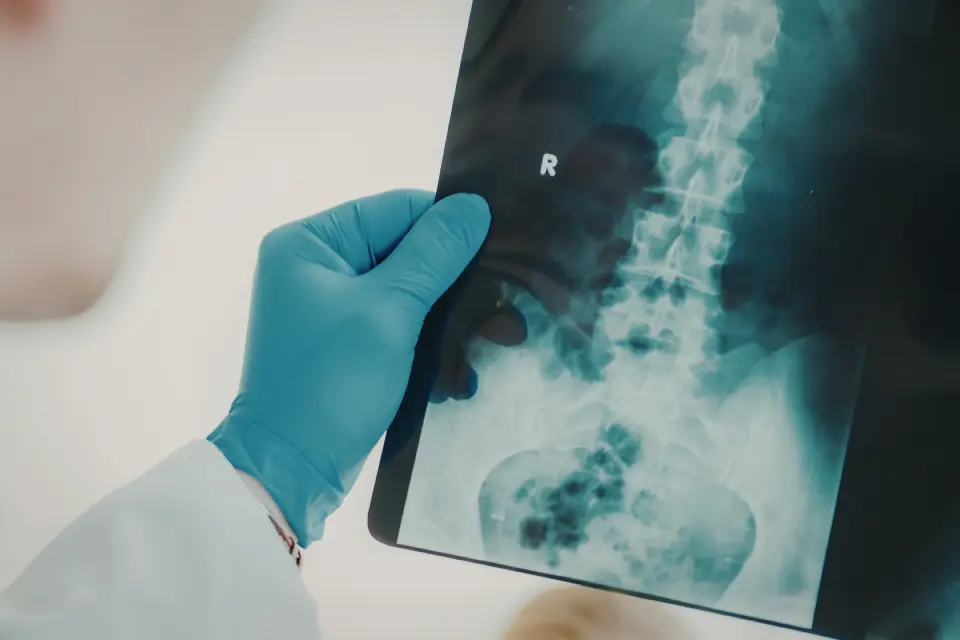
X-rays show bone spurs, joint narrowing, and vertebral changes, but miss soft tissue problems. MRI scans reveal disc herniation, spinal cord compression, and early inflammatory changes invisible on X-rays. CT scans provide detailed bone images useful for surgical planning. Blood tests help distinguish inflammatory arthritis from osteoarthritis by detecting markers like C-reactive protein and the HLA-B27 gene.
Get arthritis treatment online today
A licensed doctor can review your symptoms and send a prescription to your pharmacy, often the same day.
Related medications we prescribe
Most patients with spinal arthritis never need surgery. Conservative treatments effectively manage symptoms for the majority of people.
Physical therapy forms the cornerstone of arthritis management. Therapists design programs that strengthen core muscles supporting the spine, improve flexibility, and teach proper body mechanics. Swimming and water aerobics provide excellent low-impact exercise options. Consistency matters more than intensity: daily gentle movement beats occasional vigorous workouts.
NSAIDs like ibuprofen and naproxen reduce inflammation and pain. Acetaminophen helps with discomfort but doesn't address inflammation. For inflammatory arthritis, disease-modifying drugs slow progression and prevent joint damage. Biologic therapies such as TNF or IL-17 inhibitors are now first-line options for certain inflammatory spinal arthritides. Topical treatments offer localized relief without systemic side effects. Patients should discuss medication options with their doctors, and Doctronic.ai provides a convenient way to get initial guidance on treatment approaches.
Every extra pound adds roughly three pounds of pressure to spinal joints. Weight loss significantly reduces symptoms for overweight patients. Ergonomic modifications at work and home decrease daily stress on the spine. Supportive mattresses, proper chair height, and standing desks all contribute to symptom management.
When conservative treatments fail, advanced procedures offer additional relief. Spinal injections, radiofrequency ablation, spinal cord stimulation, and implanted drug infusion systems can be helpful for patients with relevant types of back pain.
Epidural injections deliver powerful anti-inflammatory medication directly to irritated nerves. Relief typically lasts weeks to months, allowing patients to participate more effectively in physical therapy. Nerve blocks interrupt pain signals from specific areas. Radiofrequency ablation uses heat to disable pain-transmitting nerves, providing longer-lasting relief than injections.
Surgery becomes necessary when nerve compression causes progressive weakness or bowel and bladder dysfunction. Decompression procedures remove bone spurs and tissue pressing on nerves. Spinal fusion permanently joins vertebrae together, eliminating painful motion at damaged joints. Minimally invasive and motion-preserving techniques such as artificial disc replacement are increasingly preferred where appropriate, reducing recovery time and preserving spinal mobility.
Spinal arthritis is manageable with proper care. Regular exercise, maintaining a healthy weight, and avoiding smoking all slow disease progression. Annual check-ups allow doctors to detect early changes and adjust treatment plans. Patients who actively participate in their care experience better outcomes than those who passively accept symptoms.
Cartilage damage cannot be reversed, but symptoms can be managed effectively. Early intervention slows progression and maintains function. Inflammatory types respond well to disease-modifying medications that prevent further joint damage.
High-impact activities like running and jumping stress arthritic joints. Heavy lifting and repetitive bending worsen symptoms. Low-impact alternatives like swimming, walking, and cycling provide exercise benefits without excessive strain.
Progression varies widely between individuals. Some people experience slow changes over decades, while others deteriorate more rapidly. Lifestyle factors, body weight, and treatment adherence significantly influence progression speed.
Many patients report increased pain with cold, damp weather or barometric pressure changes. While research shows mixed results, the effect appears real for some individuals. Staying warm and maintaining regular activity helps minimize weather-related flares.
Seek evaluation for back pain lasting more than two weeks, pain accompanied by numbness or weakness, or symptoms that disrupt sleep. Sudden severe pain, especially with fever or unexplained weight loss, requires immediate attention.
Spine arthritis affects most people as they age, but symptoms don't have to control daily life. Combining early diagnosis with appropriate treatment allows patients to maintain activity and comfort for years.
For personalized guidance on managing spinal arthritis symptoms, visit Doctronic.ai for free AI doctor consultations or affordable telehealth visits with licensed physicians available 24/7.
Check symptoms of spine arthritis
Chat Now