

Menopause Sleep Problems: Natural Remedies
Why Sleep Changes During MenopauseSleep disruption during menopause isn't just frustrating: it's incredibly common. Approximately 50–60% of menopausal women [...]
Read More
Medically reviewed by Alan Lucks | MD, Alan Lucks MDPC Private Practice - New York on March 17th, 2026.
Approximately 50–60% of menopausal women experience sleep problems due to declining estrogen and progesterone levels
Herbal supplements like black cohosh, valerian root, and ashwagandha may provide some natural support for sleep and hormonal balance
Phytoestrogen-rich foods, including flax, have been shown to relieve hot flashes, night sweats, and difficulty falling asleep
Keeping your bedroom between 60-67°F significantly reduces nighttime overheating
Mind-body practices like yoga and meditation address both physical discomfort and racing thoughts
Doctronic.ai provides 24/7 access to AI-powered health guidance and telehealth consultations
Sleep disruption during menopause isn't just frustrating: it's incredibly common. Approximately 50–60% of menopausal women experience sleep problems. That's more than half of all women going through this transition waking up exhausted, struggling to fall asleep, or drenched in sweat at 3 AM.
The good news? Natural remedies for menopause sleep problems exist, and many women find significant relief without prescription medications. Understanding why your body behaves differently during this time is the first step toward reclaiming restful nights. Your hormones are shifting dramatically, and your sleep patterns are responding to those changes.
Estrogen and progesterone do more than regulate your menstrual cycle. These hormones directly influence your sleep-wake patterns, body temperature regulation, and mood. As levels drop during perimenopause and menopause, your body loses important sleep-promoting signals it once relied upon.
Progesterone, in particular, has natural sedative properties. When production decreases, many women notice they simply cannot fall asleep as easily as they once did. Estrogen helps regulate body temperature and serotonin production, both critical for quality sleep.
Night sweats wake you up soaked and uncomfortable, sometimes multiple times per night. Your internal thermostat malfunctions because estrogen no longer helps regulate it properly. Insomnia shows up as difficulty falling asleep, staying asleep, or waking far too early.
These symptoms often feed off each other. Poor sleep increases anxiety, which makes falling asleep harder. Night sweats disrupt deep sleep stages, leaving you unrested even after seven or eight hours in bed.
Black cohosh has been used for centuries to address menopausal symptoms. Research suggests it may modestly reduce the frequency and intensity of hot flashes for some women, thereby improving sleep quality. Most studies use doses of 20-40 mg daily.
Start with a lower dose and give it six to eight weeks before judging effectiveness. Black cohosh works gradually, not overnight.
Valerian root promotes relaxation without morning grogginess for most women. It appears to work by increasing GABA levels in the brain, helping quiet an overactive mind at bedtime. Passionflower offers similar calming effects and combines well with valerian.
Take these supplements 30-60 minutes before bed for best results. Consistency matters: occasional use produces weaker effects than regular supplementation.
When stress hormones stay elevated at night, sleep suffers. Ashwagandha may enhance stress resilience and improve sleep quality and anxiety in some adults. This adaptogenic herb helps your body respond more appropriately to stress.
For sleep benefits, take ashwagandha in the evening. Many women notice improvements within two to four weeks of consistent use.
Your diet can provide gentle hormonal support. Studies found that flax was effective in relieving symptoms such as hot flashes, night sweats, and difficulty falling asleep. Ground flaxseed is easy to add to smoothies, oatmeal, or yogurt.
Other phytoestrogen sources include soy products, chickpeas, and sesame seeds. These plant compounds mimic estrogen weakly, potentially easing the transition as natural hormone levels decline.
Magnesium deficiency is common and worsens sleep quality. This mineral relaxes muscles, calms the nervous system, and supports healthy sleep cycles. Good sources include:
Dark leafy greens like spinach and Swiss chard
Nuts and seeds, especially pumpkin seeds and almonds
Dark chocolate in moderation
Avocados and bananas
Consider eating magnesium-rich foods at dinner to support nighttime relaxation.
Certain foods and drinks sabotage sleep during menopause. Alcohol might help you fall asleep initially, but fragments sleep later in the night and worsens hot flashes. Caffeine after noon affects sleep more as you age. Spicy foods and large meals close to bedtime can trigger night sweats.
Keep a simple food and sleep diary for two weeks. Patterns often emerge that reveal your personal triggers.
Your bedroom temperature matters enormously. Maintaining a cool sleep environment, ideally between 60-67°F, can significantly reduce nighttime overheating and support deeper sleep stages.
Use moisture-wicking sheets and lightweight, breathable pajamas. Keep a fan nearby and consider cooling pillows designed for hot sleepers. Layer blankets so you can easily adjust throughout the night.
A consistent wind-down routine signals your brain that sleep approaches. Dim lights an hour before bed, as bright light suppresses melatonin production. Avoid screens or use blue-light blocking glasses. Take a warm bath: the subsequent body temperature drop promotes drowsiness.
Choose relaxing activities such as reading, gentle stretching, or listening to calming music. Do the same sequence nightly to strengthen the sleep association.
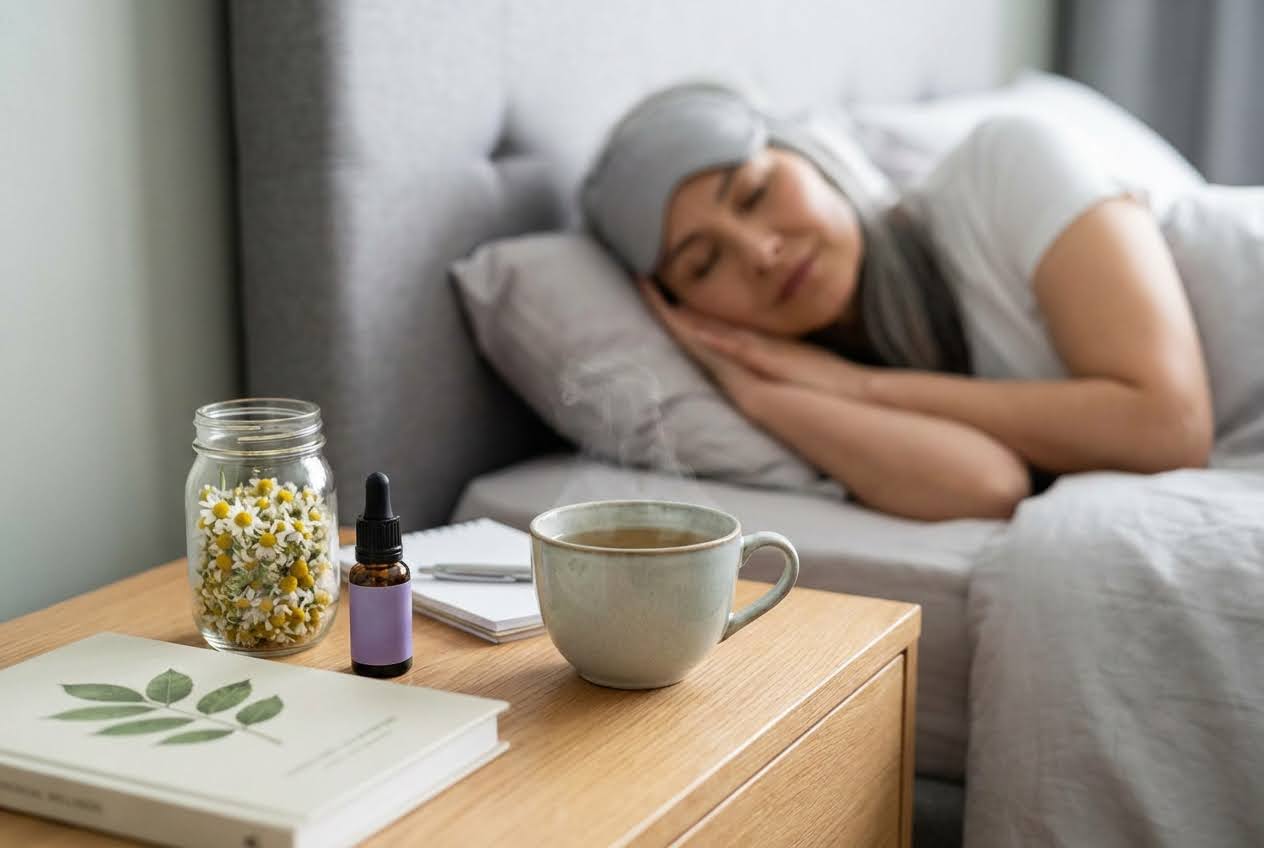 Mind-Body Techniques for Menopausal Insomnia
Gentle yoga before bed releases physical tension that accumulates during the day. Focus on restorative poses: legs-up-the-wall, child's pose, and gentle twists. Avoid vigorous practice within three hours of bedtime.
Even ten minutes of stretching helps. Pay attention to areas where you hold tension: shoulders, neck, and hips respond well to gentle movement.
Racing thoughts at bedtime respond well to meditation practice. Start with just five minutes of focused breathing. Breathe in for four counts, hold for four, exhale for six. This pattern activates your parasympathetic nervous system.
Body scan meditations work particularly well for sleep. Free apps offer guided sessions specifically designed for bedtime use.
Natural approaches help many women, but they have limits. Seek medical guidance if sleep problems persist after eight weeks of consistent natural interventions. Severe symptoms that significantly impact daily functioning deserve professional evaluation. Depression or anxiety accompanying sleep issues warrants attention.
Doctronic.ai offers free AI doctor visits where you can discuss your symptoms and receive guidance based on the latest medical research. Their system remembers your history and provides personalized recommendations. For ongoing concerns, their telehealth video visits with licensed doctors are available 24/7 in all 50 states for under $40.
Sleep disruption can begin during perimenopause and continue for several years after menopause. Most women experience the worst symptoms for two to five years, though some find relief sooner with proper interventions.
Many supplements can be combined safely, but interactions exist. Start one supplement at a time to identify what works for you. Consult with a healthcare provider through Doctronic.ai before combining multiple herbs, especially if you take other medications.
Natural remedies provide meaningful relief for mild to moderate symptoms in many women. Severe symptoms may require hormone therapy for adequate control. The best approach depends on your symptom severity, health history, and personal preferences.
Some women notice improvements within one to two weeks of eliminating triggers like alcohol and caffeine. Phytoestrogen benefits typically take four to six weeks of consistent intake to become noticeable.
Women with hormone-sensitive conditions should use caution with phytoestrogens and black cohosh. Those taking blood thinners or sedatives should check for interactions. Always disclose supplements to your healthcare providers.
Menopause sleep problems are extremely common, but many women improve with natural strategies like cooling the bedroom, adjusting diet, using gentle supplements, and practicing stress-reducing routines. If sleep issues persist or feel severe, Doctronic.ai can help assess symptoms and connect you with medical guidance 24/7.
Why Sleep Changes During MenopauseSleep disruption during menopause isn't just frustrating: it's incredibly common. Approximately 50–60% of menopausal women [...]
Read More