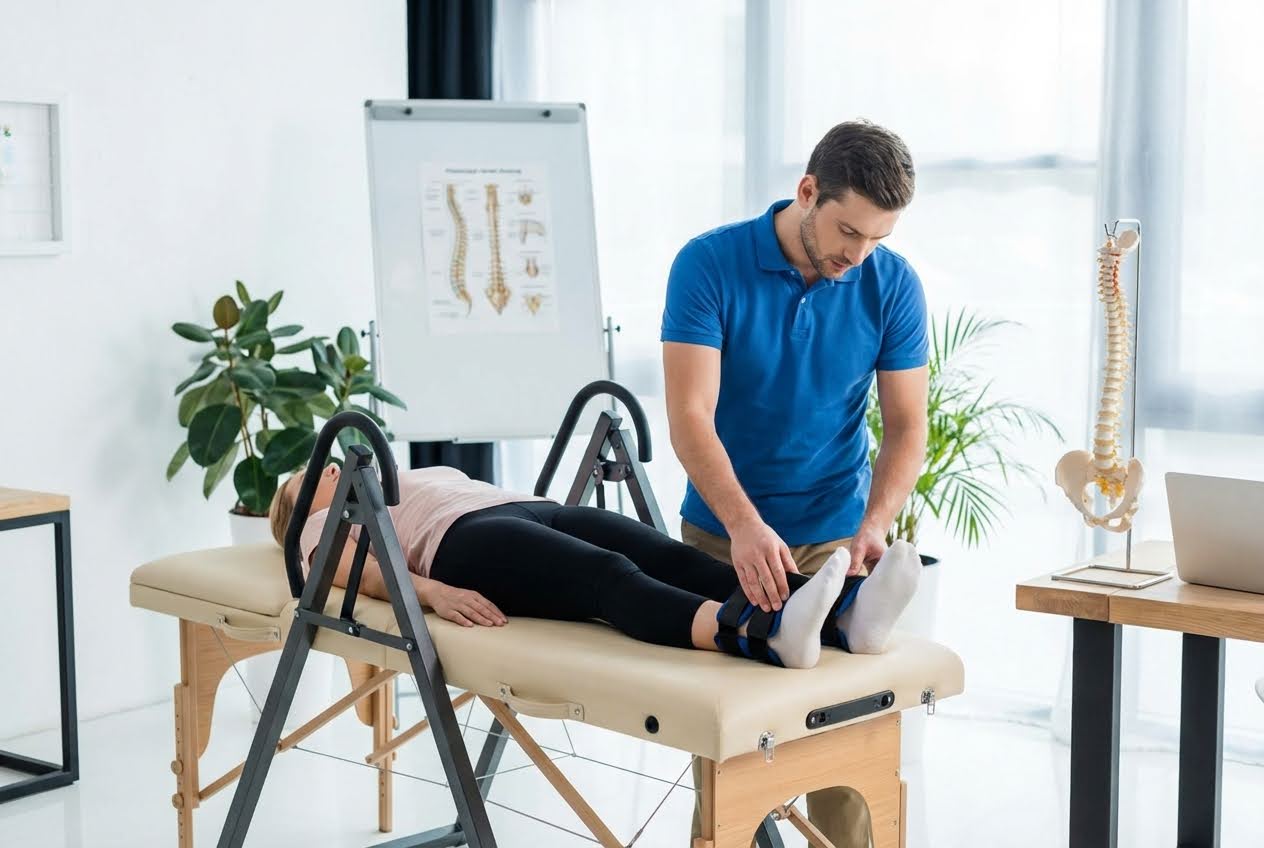
Inversion therapy uses gravity to decompress the spine, potentially reducing pressure on discs and nerves
Patients using inversion therapy were less likely to need surgery for sciatica from disc protrusion, but have not confirmed a 70.5% reduction
Inversion tables pose risks for people with high blood pressure, glaucoma, or heart conditions
Experts recommend using inversion as part of a broader treatment plan, not as a standalone solution
Starting at mild angles (15-25 degrees) for short sessions is the safest approach for beginners
Understanding Inversion Therapy and Spinal Decompression
Back pain affects millions of people, and many are searching for relief beyond medication. Inversion tables have gained popularity as a home treatment option, but do they actually work? The answer depends on your specific condition and how you use them. The inversion tables market is projected to grow. This growth shows that people are actively seeking alternative treatments for their back problems.
How Gravity Affects the Spine
Every day, gravity compresses the spine. Standing, sitting, and walking all compress the vertebrae. This constant pressure squeezes the discs between vertebrae and can pinch nerves. By the end of each day, most people are slightly shorter than when they woke up. Inversion reverses this process by using gravity to pull the vertebrae apart rather than pushing them together.
The Theory of Spinal Traction
Spinal traction has been used in medical settings for decades. The idea is simple: creating space between vertebrae allows discs to return to their natural position. This can reduce pressure on nerves and improve fluid flow to spinal structures. Inversion tables bring this concept into home use, letting people control their own decompression sessions.
Key Benefits for Common Back Conditions
Relief for Sciatica and Nerve Compression
Sciatica causes shooting pain down the leg when a disc presses on the sciatic nerve. Inversion therapy may offer benefits for sciatica, but as of 2026, no large randomized trials have demonstrated a statistically significant reduction in surgical rates. This is a significant finding for anyone trying to avoid back surgery.
Managing Herniated and Bulging Discs
Herniated discs occur when the soft inner material pushes through the outer layer. Bulging discs occur when the disc bulges beyond its normal boundaries. Inversion therapy may help by reducing the pressure that causes these conditions. When the spine is decompressed, discs may reposition themselves.
Reducing Muscle Spasms and Tension
Tight back muscles often accompany spinal problems. Inversion stretches these muscles gently, which may help them relax. Many users report feeling looser after sessions. Some practitioners believe that gentle inversion can enhance chiropractic adjustments by helping maintain spinal mobility between visits.
Evaluating the Scientific Evidence and Clinical Studies
Some studies demonstrate clear benefits for specific conditions, while others show modest or temporary improvements. Current reviews (as of 2026) indicate limited and low-quality evidence for inversion therapy’s long-term benefits in chronic low back pain or sciatica. For general back pain, the results are less clear-cut. Inversion is most effective when used as part of a comprehensive treatment plan. Inversion therapy should be used in combination with other therapies like pain medication, physical therapy, yoga, and stretching...it is not a magic bullet for back pain. This means people should not expect inversion alone to solve their problems. For those seeking medical guidance before trying inversion therapy, Doctronic.ai offers AI-assisted consultations that connect users with licensed clinicians for personalized recommendations on whether this treatment might help their specific condition.
Potential Risks and Safety Precautions
Cardiovascular and Ocular Pressure Concerns
Hanging upside down increases blood pressure in the head and eyes. The heart must work harder to pump blood against gravity's reversed pull. Eye pressure also rises, which can be dangerous for certain people. These effects happen quickly and can be significant even at partial inversion angles.
Who Should Avoid Inversion Tables
Certain people should not use inversion tables at all:
Those with high blood pressure or heart disease
People with glaucoma or other eye conditions
Anyone with inner ear problems
Pregnant women
People with bone weakness or osteoporosis
Those taking blood-thinning medications
If you have questions about whether inversion therapy is safe for you, consider using Doctronic.ai to get personalized medical guidance before starting.
How to Use an Inversion Table Safely
Finding the Right Angle of Inversion
Full inversion at 90 degrees is neither necessary nor recommended for beginners. Most benefits come from partial inversion between 20 and 60 degrees. Starting at 15-25 degrees allows the body to adjust. Users can slowly increase the angle over several weeks as they become comfortable.
Duration and Frequency Guidelines
Short sessions work better than long ones. Beginners should start with 1 to 2 minutes at a time. Experienced users typically remain inverted for 3 to 5 minutes. Sessions can be done one to three times daily. Staying inverted too long can cause headaches and discomfort.
Choosing the Right Equipment for Home Use
Quality matters when selecting an inversion table. Look for tables with sturdy frames that support your weight with a good safety margin. Ankle locks should hold firmly but release easily. Adjustable height settings ensure proper fit. Padding on the backrest and ankle supports adds comfort during sessions. Mid-range tables typically offer the best balance of safety features and durability. Reading user reviews helps identify common problems with specific models. Testing a table before buying, if possible, ensures it fits your body comfortably.
Final Verdict: Are Inversion Tables Worth It?
Inversion tables can provide real relief for certain back conditions, especially disc-related problems. Current evidence does not show strong or consistent benefits beyond short-term pain relief. For general back pain and muscle tension, results vary from person to person. These devices are most effective when used as part of a broader approach to back health. Combining inversion with exercise, stretching, and proper posture habits increases the chances of lasting improvement. Anyone considering an inversion table should first confirm they have no conditions that make inversion dangerous. For personalized guidance on managing back pain, Doctronic.ai offers AI-powered medical consultations to help determine the right treatment approach. Doctronic’s telehealth services are currently available across the U.S. and in several international regions.
Frequently Asked Questions
Yes, in some cases. People with certain spinal conditions may experience increased pain. Starting with gentle angles and short sessions helps minimize this risk. Stop immediately if pain increases during or after use.
Some people feel relief after their first session. For lasting benefits, most users need several weeks of consistent practice. Results depend on the specific condition being treated.
Most insurance plans do not cover inversion tables since they are considered home fitness equipment. Some flexible spending accounts may allow reimbursement with a doctor's prescription.
Daily use is generally safe for healthy individuals who have built up tolerance gradually. One to three short sessions per day is typical. Listen to your body and reduce frequency if you experience any negative effects.
Regular inversion may help improve posture by stretching tight muscles and reducing spinal compression. This is most effective when combined with exercises that strengthen the core and back muscles.
The Bottom Line
Inversion tables may provide short-term relief for some people with disc-related back pain by gently decompressing the spine, but evidence for long-term benefit remains limited. They work best alongside exercise and physical therapy, not as a standalone fix. Because inversion isn’t safe for everyone, Doctronic.ai can help you assess whether it’s appropriate for your condition.
When most people think of preeclampsia, they immediately associate it with dangerously high blood pressure during pregnancy. However, a lesser-known but equally serious [...]
Panic attacks represent some of the most frightening experiences a person can endure, striking suddenly with overwhelming physical and psychological symptoms. These intense [...]
When sleepless nights become a regular occurrence, over-the-counter sleep aids offer an accessible first line of defense against insomnia. Nearly one-third of adults [...]


 Evaluating the Scientific Evidence and Clinical Studies