

Vaginal Dryness During Menopause
Meta Description: Understand why vaginal dryness during menopause occurs and explore effective treatments, from moisturizing therapies to low-dose estrogen and laser [...]
Read MoreForward head posture affects an estimated 50–60% of adults, and each centimeter of forward head displacement has been associated with approximately a 10–15% reduction in neck pain treatment success rates, according to current biomechanical studies.
Tight chest muscles and weak upper back muscles create the imbalance that pulls the head forward
Chin tucks are one of the most effective corrective exercises for retraining proper head position, though other deep neck flexor and scapular strengthening exercises are also recommended.
Screen height and sleeping position play major roles in either fixing or worsening the problem
Consistent micro-breaks and posture checks throughout the day matter more than occasional long stretching sessions
Your head weighs about 10-12 pounds when balanced properly over your spine. When the head moves forward by one inch, the effective load on the neck increases to roughly 15–20 pounds due to leverage forces. Two inches forward? That's 30 pounds of strain. This mechanical reality explains why so many people suffer from chronic neck pain, headaches, and upper back tension. Forward head posture affects roughly half to three-fifths of adults globally. If you're reading this on a phone or laptop right now, there's a good chance your head is jutting forward. Understanding why this happens is the first step toward fixing it.
Tech neck develops when people spend hours looking down at screens. The cervical spine, which normally curves slightly backward, begins to straighten or even reverse its curve. The muscles at the front of the neck shorten, while those at the back become overstretched and weak. This creates a self-reinforcing pattern where the forward position feels normal, even though it's causing damage.
The immediate symptoms include neck stiffness, tension headaches, and pain between the shoulder blades. Long-term consequences are more serious: reduced respiratory efficiency, jaw problems, and accelerated spinal degeneration. Each centimeter of anterior head displacement can reduce the odds of pain improvement by approximately 10–13% in chronic neck pain patients.
The problem isn't just about tight muscles. Forward head posture is often influenced by breathing patterns. The position of the neck directly influences airway size and function. Weak deep neck flexors, tight chest muscles, and rounded shoulders all contribute to this postural pattern.
 Essential Stretches to Release Tight Neck Muscles
Before strengthening weak muscles, you need to release the tight ones. These stretches target the specific areas that pull the head forward.
The suboccipital muscles sit at the base of your skull and become extremely tight with forward head posture. To release them, lie on your back and place two tennis balls in a sock at the base of your skull. Let your head rest on the balls for 2-3 minutes while taking slow breaths. For an active stretch, tuck your chin and gently nod your head yes while keeping the chin tucked.
Stand in a doorway with your forearms against the frame, elbows at shoulder height. Step forward until you feel a stretch across your chest and the front of your shoulders. Hold for 30 seconds. Tight pectoral muscles pull the shoulders forward, which, in turn, pushes the head forward. This stretch directly addresses that chain reaction.
The SCM muscles run from behind your ears to your collarbone. When tight, they contribute to that forward head position. To stretch the right SCM, turn your head to the right, then tilt your left ear toward your left shoulder. Hold for 20 seconds and repeat on the other side. Perform this stretch 3-4 times daily.
Stretching alone won't correct forward head posture. You must strengthen the muscles that keep your head properly aligned.
The chin tuck is among the most effective exercises for correcting head position. Stand with your back against a wall. Without tilting your head up or down, pull your chin straight back as if making a double chin. Hold for 5 seconds, release, and repeat 10 times. Do this exercise several times throughout the day. The goal is to retrain your brain to recognize proper head position as normal.
The deep cervical flexors support the front of your neck and are often weak in people with forward head posture. Lie on your back with knees bent. Gently nod your head as if saying yes, feeling a slight contraction at the front of your throat. Hold for 10 seconds. This small movement activates muscles that most people never consciously use.
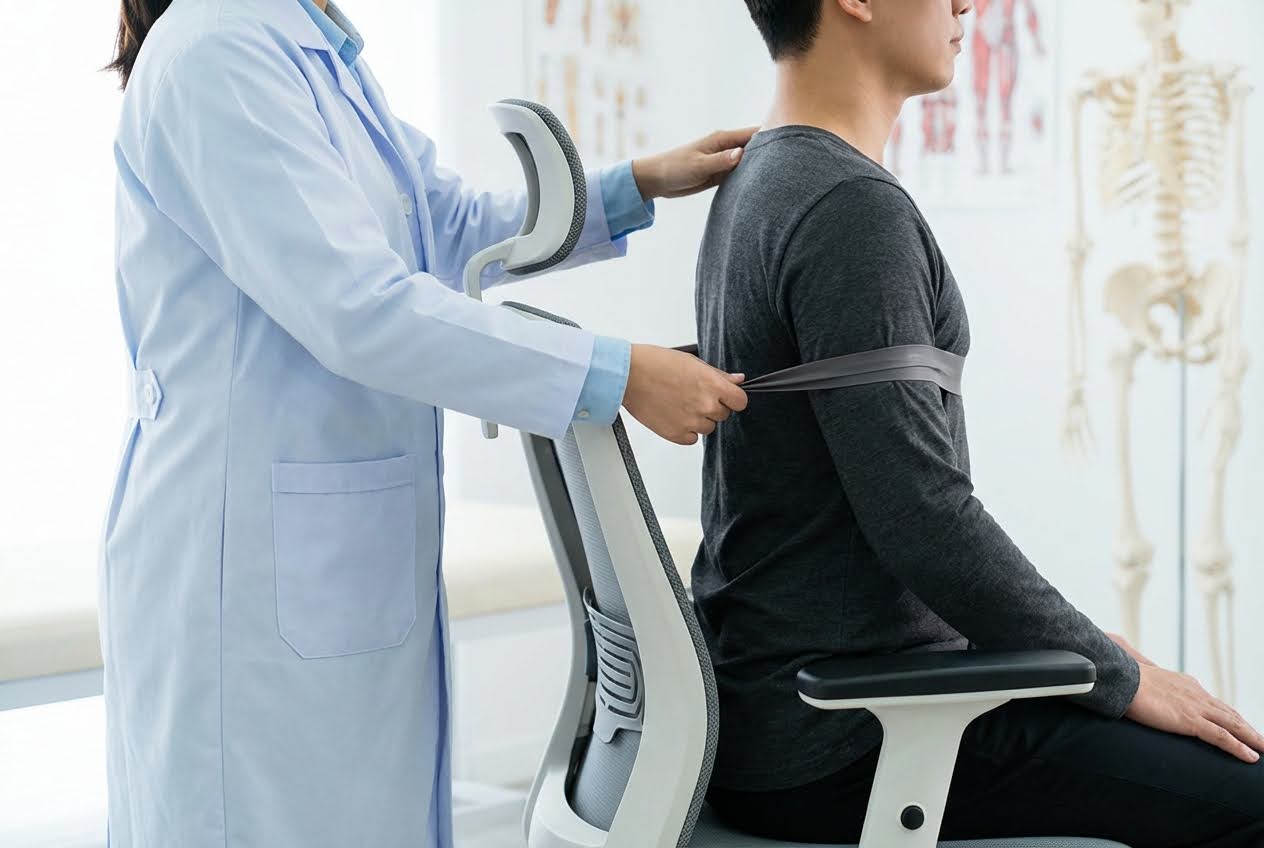
Strong upper back muscles pull the shoulders back, which helps the head stay aligned. Squeeze your shoulder blades together and down, as if putting them in your back pockets. Hold for 5 seconds. Resistance band rows and face pulls are excellent exercises for building this strength. Doctronic.ai can help assess whether your symptoms warrant professional evaluation or if home exercises are appropriate for your situation.
Exercise matters, but your daily habits matter more. Most people spend 8+ hours in positions that either help or hurt their posture.
Your monitor should be at eye level, with the top of the screen at or slightly below your eyes. Most desk posture issues start with where your feet are. When feet hang or don't reach the floor, the body compensates, affecting the pelvis, lumbar spine, and neck. Use a footrest if needed.
Bring your phone to eye level instead of dropping your head to look at it. This single change can eliminate hours of daily forward-head strain. Consider using voice-to-text features when possible. If you're unsure whether your symptoms require medical attention, Doctronic.ai offers AI-powered assessments to guide your next steps.
Sleep on your back with a cervical pillow that supports your neck's natural curve. Side sleeping works too, but your pillow must be thick enough to keep your head level with your spine. Sleeping on your stomach forces your head to turn to one side for hours, worsening forward head posture.
Fixing forward head posture isn't a one-time effort. It requires ongoing attention until proper alignment becomes automatic.
Set a timer to check your posture every 30 minutes. Stand up, do a few chin tucks, and reset your position. These brief interruptions prevent the gradual slouching that happens during focused work. Apps and smartwatches can automate these reminders.
Proprioception is your body's sense of where it is in space. People with forward head posture often have poor proprioceptive awareness of their head position. Practice standing against a wall with your head touching it, then step away and try to maintain that position. Over time, your brain will recalibrate what feels normal. For persistent symptoms or concerns about your progress, Doctronic.ai provides convenient access to medical guidance.
Most people notice improvement within 2-4 weeks of regular exercise and ergonomic changes. Full correction typically takes 3-6 months, depending on the severity and duration of the posture.
Yes. Tight neck muscles and altered proprioception associated with forward head posture can contribute to dizziness and balance problems, though vascular causes are rare. If dizziness persists, consult a healthcare provider.
In most cases, yes. Unless structural changes to the spine have occurred, the muscular and postural components respond well to corrective exercises and habit changes.
Posture correctors can serve as reminders, but shouldn't replace strengthening exercises. Relying on external support can actually weaken the muscles you need to build.
Perform chin tucks and stretches multiple times daily; brief, frequent sessions are more effective than one long session. Strengthening exercises can be done 3-4 times per week.
Forward head posture develops from muscle imbalances, prolonged screen time, and poor daily habits - but it’s highly correctable with consistent effort. Chin tucks, upper back strengthening, chest stretching, and ergonomic adjustments form the foundation of recovery. Small daily posture checks make a bigger difference than occasional workouts. If symptoms persist, Doctronic.ai can help you determine the right next steps.
Meta Description: Understand why vaginal dryness during menopause occurs and explore effective treatments, from moisturizing therapies to low-dose estrogen and laser [...]
Read MoreMeta Description: Discover why perimenopause causes itching and explore effective relief strategies, from hormone therapy to skincare tips, to soothe dry and itchy skin.When [...]
Read MoreMeta Description: Understand why weight gain during perimenopause occurs and learn how to manage it through protein intake, resistance training, and better sleep habits.Why [...]
Read More