

How Long Can Zepbound Be Out of the Fridge?
Temperature Stability and Storage Guidelines for ZepboundZepbound requires careful temperature management to work properly. Many people using this weight loss medication [...]
Read More
Medically reviewed by Alan Lucks | MD, Alan Lucks MDPC Private Practice - New York on February 23rd, 2026.
Zepbound can stay at room temperature for up to 21 days if kept at or below 86°F (30°C)
Once removed from refrigeration, the medication should never be refrozen
Light exposure and heat are the two biggest threats to medication potency
Cloudiness, particles, or color changes indicate the pen should be discarded
TSA-approved cooling cases are recommended (not essential) for travel lasting longer than a day
Doctronic.ai offers 24/7 telehealth support for medication questions
Zepbound requires careful temperature management to work properly. Many people using this weight loss medication worry about what happens when their pen sits outside the fridge for too long. The good news is that tirzepatide, the active ingredient in Zepbound, has some flexibility built into its storage guidelines. Knowing exactly how long Zepbound can be out of the fridge helps patients maintain their treatment schedule without unnecessary stress. This matters especially during travel, power outages, or busy days when refrigerator access becomes limited. The medication remains stable at room temperature for a specific window, but exceeding those limits can reduce effectiveness or create safety concerns. Understanding these boundaries protects both health outcomes and the investment patients make in their treatment.
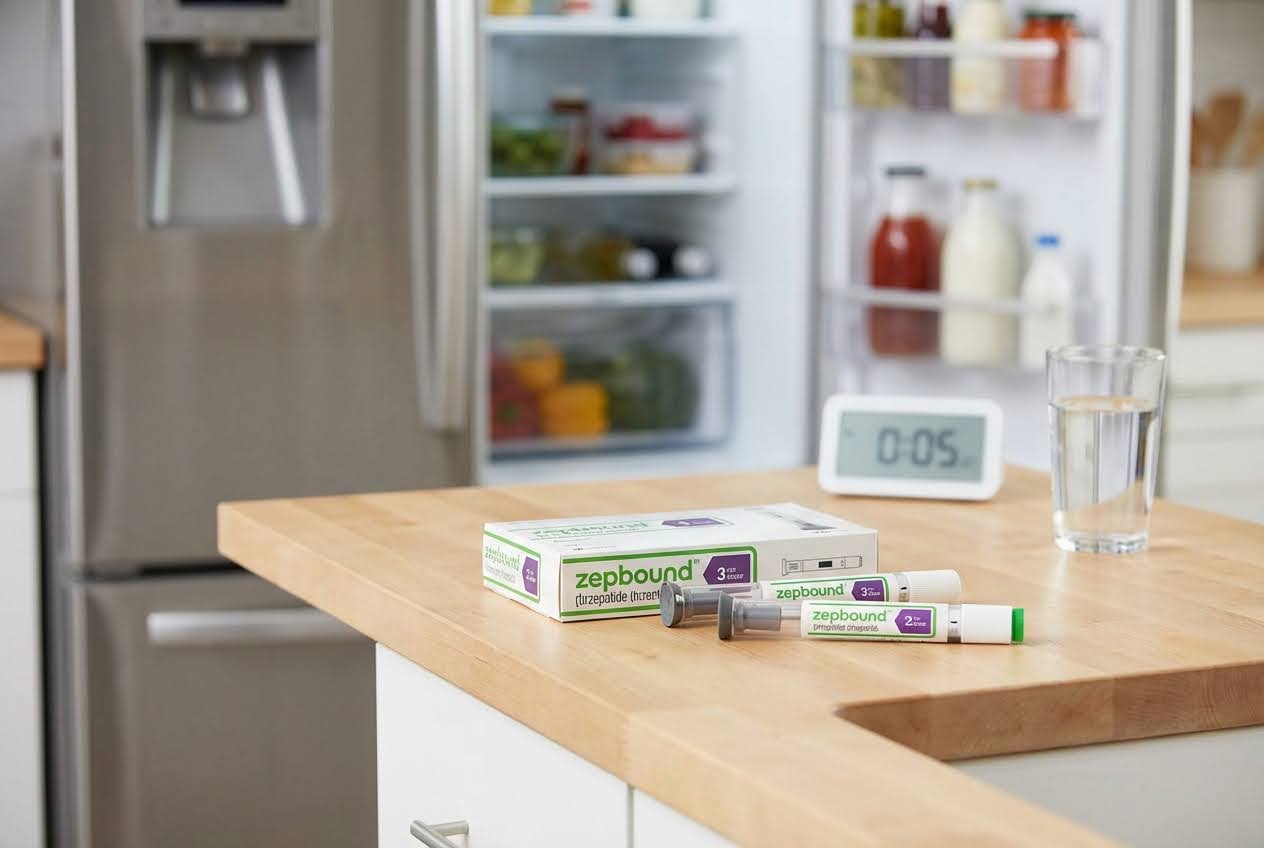 Understanding Zepbound Temperature Requirements
Zepbound works best when stored correctly. The medication contains tirzepatide, which activates GIP and GLP-1 receptors to regulate appetite and support weight loss. Temperature fluctuations can damage these delicate biological compounds.
Zepbound pens can remain unrefrigerated for up to 21 days when stored at temperatures not exceeding 86°F (30°C), according to Eli Lilly’s official prescribing information (as of 2026). This 21-day window starts the moment the pen leaves refrigeration. Patients should mark the date on their pen when removing it from the fridge.
Key points about the 21-day rule:
The clock starts immediately upon removal from refrigeration
The temperature must stay below 86°F the entire time
Any pen exceeding 21 days at room temperature should be discarded
Unused medication should not be returned to refrigeration once it has been stored at room temperature
The ideal storage temperature for Zepbound falls between 36°F and 46°F (2°C to 8°C). Most household refrigerators maintain this range in the main compartment. Patients should avoid placing pens in the freezer section or against the back wall where temperatures drop too low.
Proper refrigerator placement includes:
Middle shelves away from cooling vents
Door compartments if the temperature remains stable
Away from raw meats or foods that might contaminate the pen
In the original packaging until ready for use
Physical handling affects Zepbound stability just as much as temperature. The medication requires protection from environmental factors beyond just heat and cold.
Direct sunlight degrades tirzepatide quickly. Patients should store their pens in the original carton, which blocks light exposure. Leaving a pen on a windowsill, in a car, or near heating vents creates conditions that destroy the medication.
Protection strategies include:
Keeping pens in opaque containers or cases
Never leave medication in vehicles during any season
Storing away from windows and heat sources
Using the original packaging whenever possible
Heat damage happens faster than most patients expect. A car interior can exceed 120°F within minutes on a warm day. Even brief exposure to these temperatures ruins the medication permanently.
Freezing destroys the molecular structure of tirzepatide. Once a pen freezes, the medication becomes useless regardless of how it looks afterward. Refreezing a pen that has already been at room temperature causes even more damage.
The science behind this is straightforward. Freezing creates ice crystals that break apart the protein structures in the medication. Thawing does not repair this damage. Patients who accidentally freeze their Zepbound should discard it immediately and contact their pharmacy for a replacement.
Traveling with Zepbound requires planning, but thousands of patients manage it successfully every week. The key is preparing the right supplies and understanding security procedures.
Medical cooling cases are highly recommended but not legally required for air travel. They help maintain proper temperatures for injectable medications like Zepbound during flights and long trips. These cases use gel packs or phase-change materials to maintain proper temperatures for 24 to 48 hours.
When selecting a cooling case:
Choose cases specifically rated for medication transport
Verify the case maintains temperatures between 36°F and 86°F
Practice using the case before travel to understand timing
Carry extra cooling packs for extended trips
TSA allows injectable medications through security checkpoints. Patients should keep Zepbound in their carry-on luggage, never in checked bags. Cargo holds experience extreme temperature variations that damage medication.
The 21-day room temperature window makes extended travel possible without refrigeration. Patients traveling for less than three weeks can simply keep their pen at room temperature throughout the trip.
For longer journeys, Doctronic.ai can help patients coordinate prescription timing so fresh medication arrives at their destination. Planning ahead eliminates the stress of finding refrigeration in unfamiliar locations.
Practical tips for fridge-free travel:
Start with a fresh pen from the refrigerator
Track the 21-day deadline carefully
Keep the pen in an insulated bag away from direct heat
Request hotel room refrigerators for trips exceeding two weeks
Recognizing compromised medication prevents patients from using ineffective doses. Visual inspection catches most problems before injection.
Healthy Zepbound solution appears clear and colorless. Any visible changes indicate the medication has degraded. Patients should inspect their pen before each injection.
Warning signs to watch for:
Cloudiness or haziness in the solution
Floating particles or sediment
Yellow, brown, or other color changes
Unusual thickness or consistency
A pen showing any of these signs should be discarded immediately. Using degraded medication wastes time and delays weight loss progress.
Exposure to temperatures above 86°F compromises Zepbound even within the 21-day window. Patients who suspect heat exposure should err on the side of caution.
Steps to take after potential heat exposure:
Inspect the solution for visual changes
Contact a pharmacist or healthcare provider
Do not use the pen if any doubt exists
Document the incident for insurance replacement claims
Doctronic.ai offers 24/7 telehealth consultations where patients can discuss medication concerns with licensed physicians. Getting professional guidance quickly helps patients decide whether to use or replace their pen.
Expired or damaged Zepbound requires proper disposal. Patients should never throw pens directly in household trash where children or pets might access them.
Safe disposal options include:
FDA-cleared sharps disposal containers
Pharmacy take-back programs
Mail-back programs from medication manufacturers
Community hazardous waste collection events
Replacing compromised medication typically requires a new prescription or insurance authorization. Many pharmacies expedite replacements for temperature-damaged medications when patients explain the situation.
Patients using Zepbound for weight management should maintain consistent dosing schedules. As of 2026, Zepbound is FDA-approved to treat moderate-to-severe obstructive sleep apnea in adults with obesity. Missing doses due to medication damage disrupt treatment progress. Having a backup plan for replacements keeps therapy on track.
No. Once Zepbound has been stored at room temperature, it should not be returned to the refrigerator. The pen must be used within 21 days or discarded, even if subsequently chilled.
Frozen Zepbound must be thrown away. Freezing destroys the medication's effectiveness permanently. The pen may look normal after thawing, but the tirzepatide inside no longer works properly. Contact your pharmacy for a replacement.
Check the solution for cloudiness, particles, or color changes. A clear, colorless solution typically indicates the medication remains viable. When uncertain, consult Doctronic.ai before using the pen.
Yes, but carry documentation including your prescription and a letter from your doctor. Keep medication in carry-on luggage with a cooling case. Research destination country regulations before departure, as some nations have specific requirements for importing injectable medications.
No, room temperature injections are perfectly acceptable and often more comfortable. Many patients remove their pen from the fridge 30 minutes before injecting to reduce discomfort. The medication works the same whether injected cold or at room temperature.
Zepbound can safely stay out of the refrigerator for up to 21 days as long as it’s kept below 86°F and protected from heat and light. Proper storage prevents loss of potency and wasted doses. If you’re unsure whether a pen is still safe to use, Doctronic.ai offers 24/7 telehealth access to licensed clinicians for quick, reliable guidance.
Temperature Stability and Storage Guidelines for ZepboundZepbound requires careful temperature management to work properly. Many people using this weight loss medication [...]
Read More