Diseases and Conditions
Omeprazole Side Effects Timeline: Week by Week Guide
May 17, 2026
5 min read

Medically reviewed by Oghenefejiro Okifo | MD, Harvard Medical School | Henry Ford Hospital - Detroit, MI on April 28th, 2026.
Published on April 6th, 2026. Updated on July 24th, 2026.
Hives on skin (urticaria) are raised, itchy welts caused by mast cells releasing histamine into nearby tissue, and they can appear anywhere on the body.
Acute hives last less than six weeks and are often linked to a specific trigger such as food, medication, or infection. Chronic hives last longer than six weeks and may require ongoing management.
Common triggers include food allergies, medications, viral infections, physical pressure, temperature changes, stress, insect stings, latex, and pet dander.
Individual welts typically fade within 24 hours, but new ones can keep forming, making the overall episode feel prolonged.
Hives accompanied by swelling of the lips, tongue, or throat, or by difficulty breathing, are a medical emergency requiring immediate care.
Antihistamines are the first-line treatment for most cases of hives; cool compresses and trigger avoidance also help manage symptoms.
If your hives recur, last more than a few days, or do not respond to over-the-counter treatment, Doctronic.ai connects you with a licensed physician who can evaluate your symptoms and recommend a plan without a clinic visit.
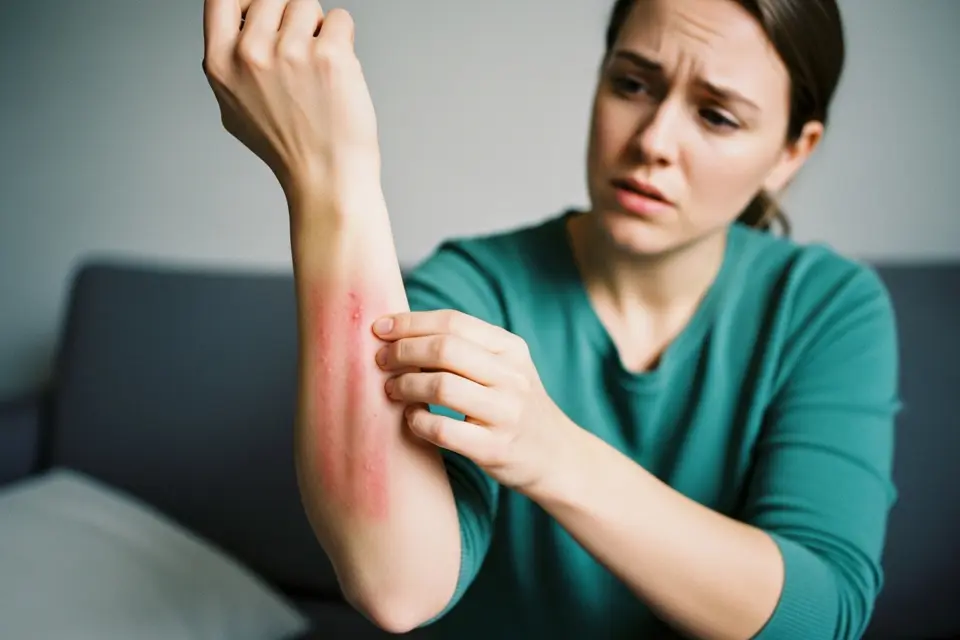
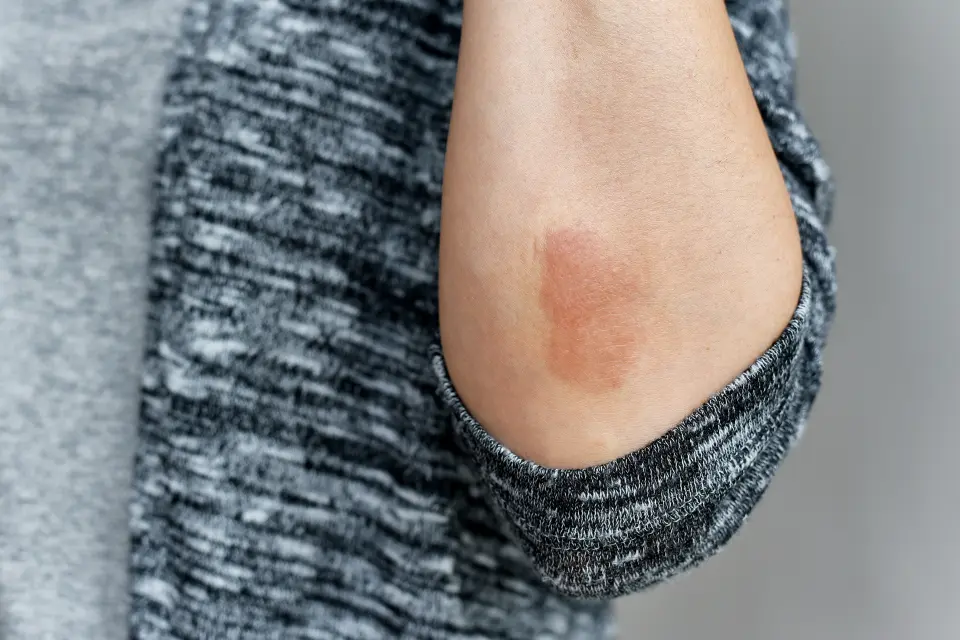
Hives on the skin, known medically as urticaria, are one of the most common skin reactions people experience. They appear as raised, pink or red welts that may be as small as a pencil eraser or as large as a dinner plate, and they almost always itch. Some people describe the sensation as burning or stinging rather than pure itch.
What makes hives recognizable is their behavior: press a welt firmly with your finger, and the center will turn white, a phenomenon called blanching. This happens because the redness comes from fluid-filled blood vessels, and pressure temporarily displaces that fluid.
Individual welts can appear anywhere on the body, including the face, trunk, arms, legs, and even the throat. A single welt typically resolves within 24 hours, but new ones may keep forming, making the condition feel like it is not clearing.
Doctors classify hives based on how long they last, and the distinction matters for treatment.
Acute urticaria lasts less than six weeks and accounts for the majority of hive episodes. A single trigger, such as a food, medication, or infection, is often identifiable, and the hives clear once that trigger resolves.
Chronic urticaria lasts longer than six weeks, with welts appearing most days. It affects roughly 1 in 50 people at some point. In most chronic cases, no specific trigger can be identified. This subset is called chronic spontaneous (or idiopathic) urticaria and is thought to involve an autoimmune component where the immune system activates mast cells without an external cause.
A full breakdown of hives triggers and treatment options can help you understand what your doctor may consider when evaluating a case that does not clear quickly.
Mast cells are immune cells found throughout the skin. When they detect a threat, whether an allergen, an infection signal, or a physical stimulus, they release a burst of histamine into the surrounding tissue. Histamine binds to receptors on small blood vessels, making vessel walls more permeable (which allows fluid to leak and form the raised wheal) and dilating the vessels (which creates the surrounding redness).
This is why antihistamines work: they block histamine receptors so that even if histamine is released, it cannot produce its full effect on the vessels.
Identifying a trigger is the most effective way to prevent recurrence. For acute hives, the cause is often something that changed in the 24 to 48 hours before the episode started.
The most common food culprits are peanuts, tree nuts, shellfish, fish, eggs, milk, wheat, and soy. Hives typically begin within minutes to two hours of eating the food, and in some people, even trace exposure can trigger a reaction.
Antibiotics (especially penicillin and sulfa drugs), NSAIDs like ibuprofen and aspirin, and ACE inhibitors used for high blood pressure are among the most frequent medication triggers. Hives from a medication can appear within minutes or develop over days.
Viral infections are a leading cause of acute hives, particularly in children. The hives often appear as the infection is resolving and can last one to two weeks.
Some people develop hives in response to physical stimuli: dermographism (hives that appear where skin is scratched), cold urticaria (triggered by cold air or water), pressure urticaria (triggered by tight clothing or belts), and exercise-induced hives. Rapid temperature shifts are a reliable trigger for cold urticaria specifically.
Stress does not directly cause hives but can lower the reaction threshold in people already prone to them, priming mast cells for a stronger response to an otherwise tolerable trigger.
Venom from bee, wasp, and hornet stings directly triggers mast cell degranulation. Hives at the sting site are common and expected; generalized hives following a sting, especially with throat swelling or difficulty breathing, may indicate anaphylaxis and require emergency care.
Latex allergy is more common in healthcare workers and people who have had multiple surgeries. Contact with latex gloves, balloons, or medical equipment can cause localized or widespread hives.
Pet dander, pollen, and mold spores can trigger hives in people with relevant sensitivities, typically alongside nasal congestion or eye itching.
Several features together point clearly to hives:
Raised, firm welts with a pale center and red border
Welts that blanch (turn white) when pressed
Intense itching, sometimes with a burning quality
Individual welts that resolve within 24 hours but are replaced by new ones nearby
Irregular shapes and sizes, sometimes merging into large patches
Hives tend to favor the trunk, arms, and legs, but can appear anywhere. Distinguishing them from eczema, contact dermatitis, or heat rash matters because treatments differ. A useful starting point is to identify what's causing your rash before reaching for any treatment.
Most hive episodes are not dangerous, but hives can sometimes signal a systemic allergic reaction affecting organs beyond the skin, and in those situations, the speed of response matters.
Angioedema is a related reaction in which fluid leaks into deeper tissue layers rather than the surface skin. It most commonly affects the lips, eyelids, tongue, and throat, causing swelling that may be painful rather than itchy. Angioedema of the throat can narrow the airway. It often accompanies hives but can occur without them, and any swelling of the tongue or throat requires emergency evaluation.
Anaphylaxis is a severe, whole-body allergic reaction. Hives may be its first visible sign, but the defining features are systemic: throat tightness, shortness of breath or wheezing, dizziness, rapid or weak pulse, and a sudden drop in blood pressure. Call emergency services immediately if hives appear alongside any of these symptoms, and use an epinephrine auto-injector if one is available.
Second-generation antihistamines are the first-line treatment for most hives. Cetirizine (Zyrtec), loratadine (Claritin), and fexofenadine (Allegra) are available over the counter and are less sedating than older options like diphenhydramine (Benadryl). For acute hives that do not improve within a day or two, a doctor may recommend higher doses or prescription options.
For chronic hives that do not respond to standard doses, a physician may add an H2 antihistamine (such as famotidine) or prescribe omalizumab (Xolair), a biologic injection with strong results in chronic spontaneous urticaria.
A cool, damp cloth on active welts temporarily relieves itching while antihistamines take effect. Avoid hot water and warm environments during an active episode, as heat tends to worsen itching.
Avoiding a confirmed trigger is the most reliable long-term strategy. Keep a diary of food, new medications, recent illnesses, and activities in the 48 hours before each episode; patterns often emerge within a few episodes. For known food allergies, strict avoidance and carrying an epinephrine auto-injector are standard practices.

Hives are raised, pink or red welts with a pale center that blanch when pressed. They range from very small to several inches across, are intensely itchy, and individual welts come and go within 24 hours as new ones form to replace them.
In acute cases, the most common causes are food allergens (nuts, shellfish, eggs), medications (especially antibiotics and NSAIDs), and viral infections. In chronic cases, no trigger can be identified in the majority of people, pointing to an underlying immune response rather than a specific external cause.
Acute hives usually resolve within a few hours to a few days once the trigger is removed. Individual welts fade within 24 hours, but new ones can keep appearing. Chronic hives are defined as recurring episodes lasting more than six weeks.
Stress alone does not typically cause hives, but it can lower the reaction threshold in people already prone to them. Think of it as an amplifying factor rather than a standalone trigger.
No. Hives are an immune response, not an infection, and cannot be passed to another person.
Go to the emergency room immediately if hives are accompanied by throat tightness, tongue or lip swelling, difficulty breathing, dizziness, or a rapid or weak pulse, as these signs suggest anaphylaxis requiring emergency treatment with epinephrine.
Not always. In acute cases, a trigger is often found with careful questioning. In chronic urticaria, the cause remains unknown in most patients even after evaluation, though most people can still achieve good control with antihistamines.
Mild, localized hives without other symptoms can be managed at home with over-the-counter antihistamines and cool compresses. Hives affecting the face or throat, or accompanied by systemic symptoms, require medical attention.
Hives are among the most common immune reactions, and most cases resolve with antihistamines and trigger avoidance. Understanding the difference between acute and chronic urticaria, recognizing the warning signs of angioedema and anaphylaxis, and knowing which triggers to investigate puts you well ahead of the next episode.
If your hives keep coming back, do not respond to over-the-counter treatment, or are interfering with daily life, a physician evaluation is worth having. Doctronic.ai lets you consult a licensed doctor online who can review your symptoms, order testing if appropriate, and recommend a treatment plan without waiting for a clinic appointment.
Get skin care advice
Chat Now
Join 50,000+ readers using Doctronic to understand symptoms, medications,
and next steps.
Add your phone number below to get health updates and exclusive VIP offers.
By providing your phone number, you agree to receive SMS updates from Company. Message and data rates may apply. Reply “STOP” to opt-out anytime. Read our Privacy Policy and Terms of Service for more details.
Save your consults. Talk with licensed doctors and manage your health history.