Herniated Disc vs Bulging Disc: What’s the Difference?
Key Takeaways
A bulging disc means the outer wall is intact but pushed outward, while a herniated disc involves a tear that allows inner material to leak out
Herniated discs cause more symptoms because the leaked nucleus pulposus directly irritates nearby nerves
Disc bulges are found in 30% of 20-year-olds and 84% of 80-year-olds, often without any pain
Men experience herniations at more than twice the rate of women (4.8% vs 2.5%)
Most cases respond well to conservative treatment like physical therapy and medication
Doctronic.ai can help you understand your symptoms and connect with doctors for a proper diagnosis
Anatomy of the Spinal Disc: The Jelly Donut Analogy
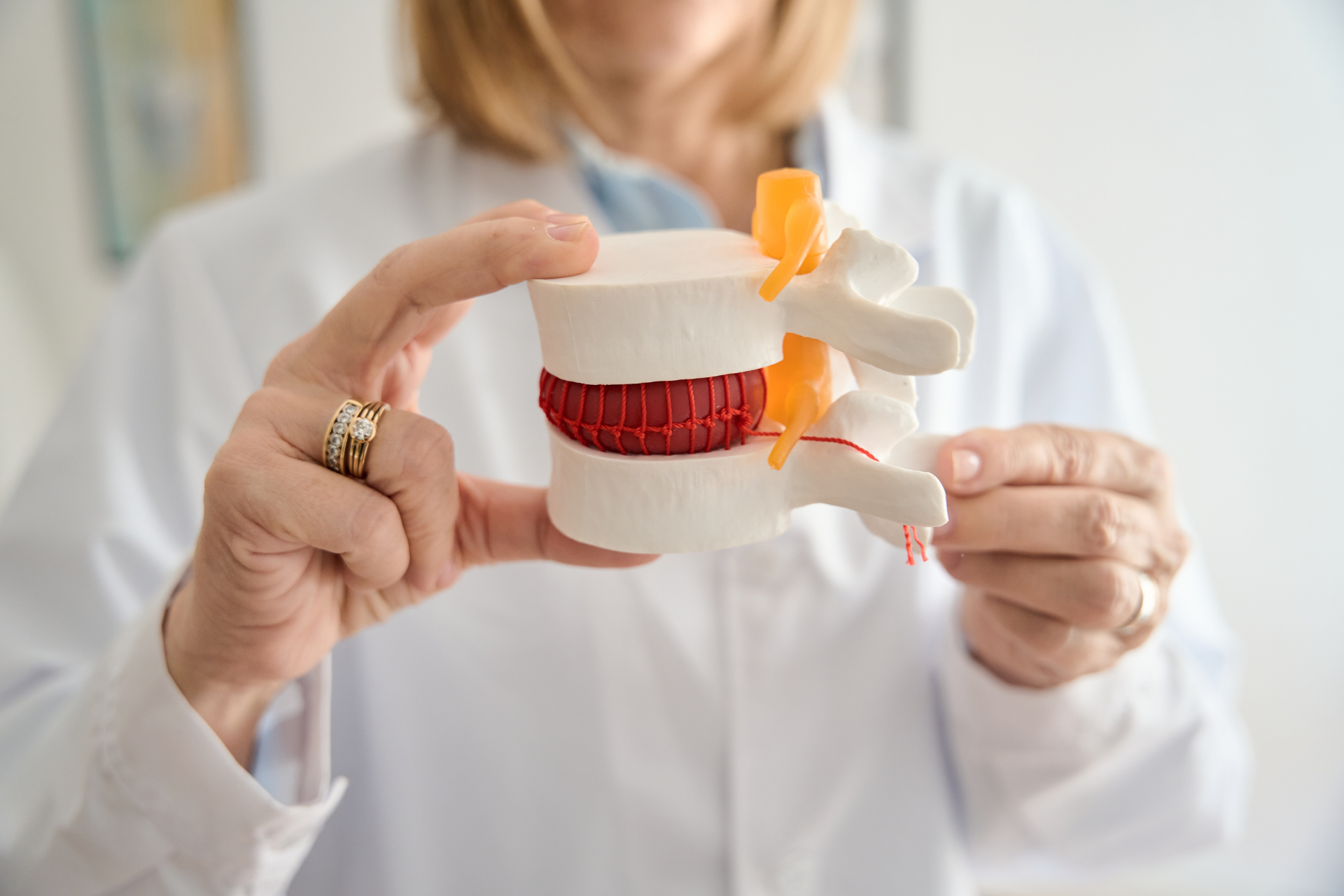
Back pain sends millions of people searching for answers, and two terms keep appearing: herniated disc and bulging disc. Understanding the difference between these conditions starts with knowing how spinal discs work. Picture a jelly donut sitting between each vertebra in your spine. The outer dough represents the tough exterior, while the jelly inside provides cushioning. When something goes wrong with either part, pain and other symptoms can follow.
The Role of the Annulus Fibrosus
The annulus fibrosus is the strong outer ring of the spinal disc. Made of tough, layered collagen fibers, this structure maintains containment. It absorbs shock during movement and prevents the soft inner material from escaping. Think of it as a tire wrapped around the disc's center. When this outer wall weakens or tears, problems begin.
The Function of the Nucleus Pulposus
Inside that protective ring sits the nucleus pulposus, a gel-like substance that acts as a shock absorber. This soft center distributes pressure evenly across the disc during bending, twisting, and lifting. The nucleus pulposus contains mostly water, which is why staying hydrated matters for spine health. When this material pushes against or through the outer wall, disc problems develop.
Defining the Bulging Disc: Containment and Pressure
A bulging disc happens when the annulus fibrosus remains intact but extends beyond its normal boundary. The disc pushes outward like a hamburger patty that's too big for its bun. The outer wall stretches but does not tear. Disc bulge prevalence increases from 30% in 20-year-olds to 84% in 80-year-olds.
Causes of Disc Bulging
Age is the primary driver of disc bulging. As people get older, discs lose water content and become less flexible. Poor posture, repetitive movements, and excess body weight speed up this process. Sitting for long periods puts constant pressure on spinal discs. Genetics also plays a role in how quickly discs wear down.
Common Symptoms and Physical Indicators
Many bulging discs cause no symptoms. Experts note that bulging discs are often incidental findings, not associated with low back pain, because of their high prevalence in asymptomatic individuals. When symptoms do appear, they typically include dull aching in the lower back, stiffness after sitting, and mild discomfort during certain movements. Doctronic.ai can help people assess whether their symptoms warrant further evaluation.
Defining the Herniated Disc: Rupture and Irritation
A herniated disc involves an actual tear in the annulus fibrosus. The nucleus pulposus pushes through this opening and can press on nearby nerves. Going back to the jelly donut comparison: the dough has cracked, and the jelly is squeezing out. This escaped material causes direct nerve irritation.
The Mechanism of Disc Herniation
Herniation often happens suddenly during lifting, twisting, or bending. The outer wall develops a weak spot or crack, and internal pressure forces the gel-like center through the opening. Herniated discs are generally more symptomatic than bulging discs because the leakage of the nucleus pulposus can irritate nerves.
Nerve Root Compression and Sciatica
When herniated disc material contacts a nerve root, sharp pain can shoot down the leg. This condition is called sciatica when it affects the sciatic nerve. Numbness, tingling, and muscle weakness may follow. Herniations are significantly more common among men (4.8%) than women (2.5%).
Key Differences: Location, Severity, and Pain
Understanding the distinction between a bulging disc and a herniated disc helps individuals make better decisions about treatment. The differences affect diagnosis, symptom severity, and recovery time.
Structural Integrity Comparison
The main distinction lies in the outer wall. A bulging disc has an intact annulus fibrosus that has simply expanded outward. A herniated disc has a torn outer wall with material escaping. This structural difference explains why herniations typically cause more problems. The leaked nucleus pulposus contains chemicals that induce inflammation of nerve tissue.
How Pain Profiles Differ Between the Two
Bulging disc pain is typically localized and dull. People describe it as an ache that worsens with certain positions. Herniated disc pain is often sharp, shooting, and travels along nerve pathways. The pain may worsen with coughing, sneezing, or straining. Leg symptoms are more common with herniations because the escaped material directly contacts nerve roots.
Diagnostic Tools and Imaging Techniques
Proper diagnosis requires more than symptom description. Doctors use several methods to determine exactly what's happening in the spine.
The Role of MRI and CT Scans
MRI scans provide the clearest images of soft tissues, making them ideal for evaluating disc problems. These images show whether the outer wall is intact or torn. CT scans offer detailed bone images and can reveal disc issues when combined with contrast dye. Doctronic.ai can help patients understand their imaging results and prepare questions for their doctors.
Physical Examination and Reflex Testing
Doctors test reflexes, muscle strength, and sensation to identify which nerves might be affected. The straight-leg raise test may indicate a disc herniation when it reproduces radiating leg pain. Walking on heels and toes checks for muscle weakness. These simple tests guide decisions about whether imaging is needed.
Treatment Pathways and Recovery Options
Most disc problems improve without surgery. The body can often heal these injuries when provided with appropriate support and time.
Conservative Management and Physical Therapy
Physical therapy strengthens core muscles that support the spine. Specific exercises improve flexibility and reduce pressure on damaged discs. Activity modification helps avoid movements that worsen symptoms. Ice and heat therapy provide temporary relief. Most patients see improvement within six to twelve weeks of starting conservative treatment.
Medications and Epidural Injections
Over-the-counter pain relievers like ibuprofen reduce inflammation. Muscle relaxants help with spasms that accompany disc problems. Epidural steroid injections deliver anti-inflammatory medication directly to the affected area. These injections can provide relief lasting weeks to months.
Surgical Interventions: Discectomy and Laminectomy
Surgery becomes an option when conservative treatment fails after several months. A discectomy removes the portion of disc material pressing on nerves. A laminectomy removes part of the vertebral bone to create more space. Both procedures have high success rates for appropriate candidates.
Preventing Future Spinal Disc Injuries
Prevention focuses on reducing stress on spinal discs through daily habits:
Maintain a healthy body weight to reduce disc pressure
Practice proper lifting technique by bending at the knees
Take breaks from sitting every 30 to 60 minutes
Strengthen core muscles through regular exercise
Stay hydrated to maintain disc water content
Use good posture when standing and sitting
Frequently Asked Questions
Yes. A bulging disc can progress to a herniation if the weakened outer wall eventually tears. Continued stress on the disc increases this risk.
Most herniated discs improve significantly within six to twelve weeks with conservative treatment. Complete healing may take three to nine months.
Most people do not need surgery. Only about 5% to 10% of herniated disc cases require surgical intervention after conservative treatments fail.
Yes, but the right exercises matter. Low-impact activities and core strengthening help recovery. Avoid heavy lifting and high-impact movements until symptoms resolve.
Prolonged sitting, heavy lifting, twisting motions, and poor posture all increase disc stress. Smoking also impairs disc health by reducing blood flow.
The Bottom Line
A bulging disc involves an intact outer wall that has expanded outward, while a herniated disc means the outer wall has torn and the inner material has escaped. Both conditions often improve with conservative treatment, but herniated discs typically cause more severe symptoms due to direct nerve irritation. For personalized guidance on your symptoms, visit Doctronic.ai to access AI-assisted symptom analysis and licensed telehealth consultations available 24/7 on demand.
Idiopathic intracranial hypertension (IIH), formerly known as pseudotumor cerebri, is a neurological condition where pressure inside the skull increases without any [...]
When anxiety hits suddenly, it can feel overwhelming and out of control. Your heart races, your breathing becomes shallow, and your mind spirals with worried thoughts. The [...]
Sleep apnea affects millions worldwide, causing interrupted breathing during sleep and leading to serious health complications when untreated. As families often notice [...]


 Defining the Bulging Disc: Containment and Pressure