
Heat Rash: What It Looks Like, What Causes It, and How to Treat It

Medically reviewed by Alan Lucks | MD, Alan Lucks MDPC Private Practice - New York on May 22nd, 2026.
Published on April 6th, 2026. Updated on July 24th, 2026.
Key takeaways
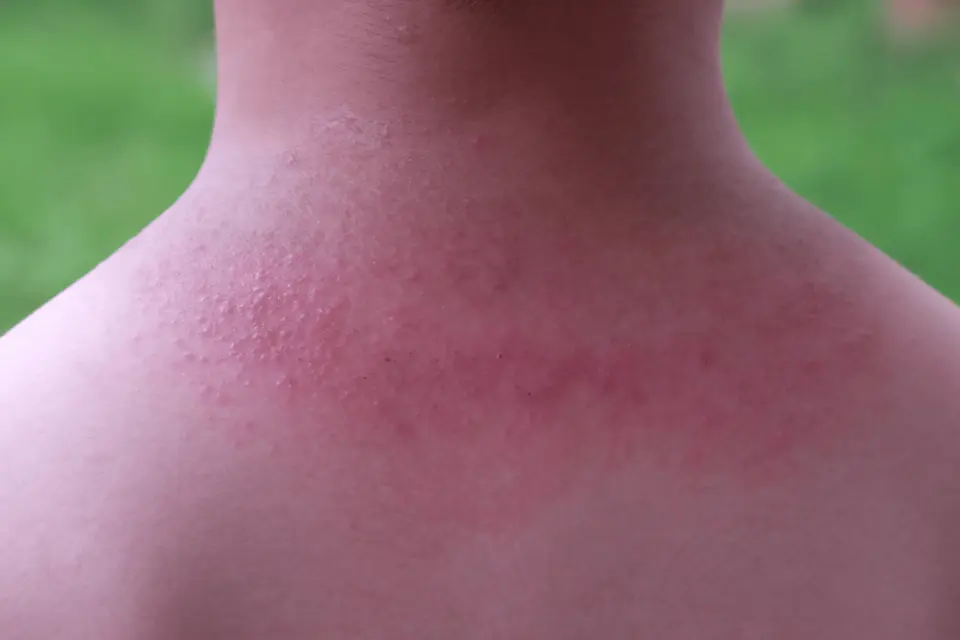
Heat rash appears when sweat ducts become blocked, trapping perspiration under the skin and producing clusters of small bumps, blisters, or prickling irritation most commonly on the neck, chest, back, and skin folds.
There are three types of heat rash: miliaria crystallina (clear, fragile blisters just under the surface), miliaria rubra (red, itchy bumps deeper in the skin), and miliaria profunda (firm, flesh-colored bumps in the deepest skin layer).
Hot, humid weather is the main trigger, but tight clothing, thick creams, prolonged bed rest, and fever can also block sweat ducts and cause heat rash even indoors.
Infants, athletes, outdoor workers, and people who are overweight are at the highest risk because they generate more body heat or have skin folds where moisture accumulates.
Cooling the skin, wearing loose breathable clothing, and avoiding heavy moisturizers resolve most cases within a few days without prescription treatment.
If your rash is spreading, accompanied by fever, or looks infected, Doctronic.ai offers free AI consultations and same-day telehealth visits with licensed physicians to help identify the rash type and recommend next steps.
What Heat Rash Looks Like
Heat rash goes by many names: prickly heat, miliaria, sweat rash. Whatever you call it, the pattern is consistent. Small bumps or blisters appear suddenly after exposure to heat, clustered on the neck, upper chest, back, underarms, groin, and elbow creases, wherever heat and sweat accumulate, and airflow is limited. The hallmark sensation is prickling or stinging from trapped sweat pushing against blocked ducts. In milder forms, there may be no visible bumps at all. Heat rash typically spares the palms, soles, and mucous membranes, which have a different type of sweat gland.
Understanding heat rash symptoms and causes is the first step toward treating it correctly and ruling out conditions that look similar.
The Three Types of Heat Rash
Miliaria Crystallina
Miliaria crystallina is the most superficial and mildest form. The blockage occurs in the outermost skin layer (the stratum corneum), and sweat collects just beneath the surface as tiny, clear or white blisters that rupture easily and do not usually itch. This type is most common in newborns and in adults who develop a fever. The blisters heal within hours to a day once the person cools down.
Miliaria Rubra
Miliaria rubra is the most familiar form. The blockage is deeper (in the epidermis), so sweat leaks into the surrounding tissue and triggers inflammation. The result is small red or pink bumps that itch and produce a distinct prickling sensation, sometimes with tiny blisters at the center. This form is common in adults and older children during hot weather or physical activity and can become uncomfortable enough to disrupt sleep.
Miliaria Profunda
Miliaria profunda is the least common and most severe type. The blockage occurs in the dermis, so sweat cannot escape at all. The bumps are firm, flesh-colored, and about the size of a grain of rice. They do not itch like miliaria rubra, but the affected skin feels tight and uncomfortable. Because sweating is blocked in those areas, the body loses cooling capacity, and people with widespread miliaria profunda are at risk for heat exhaustion. This type is more common in people who live and work in chronically hot environments and have had repeated bouts of miliaria rubra that damaged sweat ducts over time.
What Causes Heat Rash
The root cause of all three types is the same: a blocked sweat duct. Hot, humid weather is the most common trigger. When air is saturated with moisture, sweat cannot evaporate efficiently, and duct openings become plugged with skin cells or bacteria. Tight or non-breathable clothing traps heat and sweat against the body; synthetic fabrics like nylon and polyester are more likely to cause problems than loose cotton. Thick occlusive skincare products and petrolatum-based creams can physically seal duct openings on the face, neck, and chest. Prolonged bed rest and fever trap heat against immobile skin, which is why bedridden patients and overdressed infants are particularly susceptible. Strenuous physical activity in warm conditions generates body heat faster than it can dissipate, creating ideal conditions for blockage.
Who Gets Heat Rash
Several groups are at elevated risk. Infants are most vulnerable because their sweat ducts are not yet fully mature; overdressing and warm ambient temperatures quickly lead to blockage. Athletes and outdoor workers generate high sweat rates and often wear tight, non-breathable gear against the skin for extended periods. People who are overweight have additional skin folds where heat and moisture accumulate without air circulation, making miliaria rubra more frequent in the abdomen, inner thighs, and underarms. People who are bedridden or running a fever are also at risk because heat and moisture accumulate against the skin with limited airflow.
How to Tell Heat Rash Apart From Other Rashes
Because heat rash shares visual features with several other conditions, misidentification is common. Knowing how to distinguish between them helps you choose the right treatment.
Heat Rash vs. Eczema
Eczema (atopic dermatitis) produces dry, thickened, scaly patches in the same areas as heat rash (elbow creases, neck). The key difference is timing: eczema flares are not necessarily triggered by heat, tend to produce more scaling and crusting, and are often accompanied by a history of allergies or asthma. Heat rash is almost always tied to a heat event and resolves quickly once the person cools down.
Heat Rash vs. Hives
Hives (urticaria) produce raised, blotchy welts that can appear and disappear within hours and move to different areas of the body. Knowing how to distinguish hives from other rashes is helpful here: hives are often triggered by an allergen, medication, or infection, and the individual welts are typically larger and more irregular than heat rash bumps. Hives also cause an intense, generalized itch rather than the localized prickling of miliaria.
Heat Rash vs. Fungal Infections
Tinea versicolor and intertrigo can look similar to heat rash in warm, moist skin folds. Fungal rashes tend to be more persistent, have defined edges with mild scaling, and lack the prickling sensation of miliaria. If a rash in skin folds does not clear within a few days of cooling down and staying dry, a fungal cause is worth considering.
Heat Rash vs. Contact Dermatitis
Contact dermatitis appears when the skin reacts to an irritant or allergen. It can look like miliaria rubra (red, itchy bumps) but is typically confined to the exact area where the irritant touched the skin, such as under a watchband or where a new laundry detergent contacted clothing. Heat rash distributes more broadly across areas of heat accumulation rather than following a precise contact pattern. If you are trying to identify what's causing your rash before deciding on treatment, working through triggers and appearance together is the most reliable approach.
Treatment
Cooling the Skin
The first and most effective step is removing the heat source. Move to an air-conditioned space, take a cool (not cold) shower, and remove tight or non-breathable clothing. For most cases of miliaria crystallina and mild miliaria rubra, this alone resolves the rash within hours to a few days.
Keeping Skin Dry
Pat the skin dry after bathing rather than rubbing. Allow skin folds to air dry. Lightweight, loose-fitting clothing made of natural fibers helps the skin breathe and prevents moisture from building up again.
Topical Treatments
Calamine lotion relieves itching and prickling by cooling the skin and mildly drying the surface. Hydrocortisone cream (0.5% to 1%) applied sparingly can reduce inflammation in more uncomfortable cases. Avoid thick creams, oils, or occlusive ointments while the rash is active, as these keep sweat ducts blocked.
When to See a Doctor
Most heat rash does not need medical attention. Seek care if:
The rash does not improve within three to four days despite cooling measures
The bumps become pus-filled, warm to the touch, or are surrounded by spreading redness (signs of infection)
You develop a fever alongside the rash
You experience symptoms of heat exhaustion: heavy sweating, weakness, dizziness, nausea, or rapid heart rate
The rash is widespread, and you cannot sweat normally in those areas
Prevention
Choose the Right Clothing
Loose, breathable fabrics allow air to circulate and sweat to evaporate. In high heat, moisture-wicking athletic fabrics reduce sweat accumulation on the skin surface. Avoid tight waistbands and restrictive garments during outdoor activity in warm weather.
Manage Your Environment
Air conditioning is the most reliable prevention for people prone to heat rash. If AC is not available, fans, cool showers, and avoiding the hottest parts of the day (10 a.m. to 4 p.m.) reduce sweat output. Sleeping in a cool room with minimal bedding lowers overnight heat rash risk, especially for infants.
Adjust Skincare Products
Switch from thick creams and petrolatum-based products to lighter, water-based formulations during warm months. Apply sunscreen in a thin, even layer and choose non-comedogenic formulas for the face, neck, and chest.
Frequently Asked Questions
In adults, heat rash most commonly appears as clusters of small red or pink bumps (miliaria rubra) on the neck, chest, back, underarms, and skin folds. The bumps may have tiny blisters at the center and cause a prickling sensation. In milder cases, clear blisters with no redness (miliaria crystallina) appear, particularly after a fever.
Miliaria crystallina can resolve within hours once you cool down. Miliaria rubra typically clears within two to four days with cooling measures and loose clothing. Miliaria profunda takes longer and can recur if you return to a hot environment before the sweat ducts have fully healed.
No. Heat rash is caused by a physical blockage of sweat ducts, not by a pathogen. Two people in the same hot environment may both develop it, but that is because of a shared trigger, not person-to-person transmission.
Yes. If bacteria enter through scratched or opened blisters, the bumps can fill with pus (miliaria pustulosa). Signs of infection include expanding redness, warmth, swelling, and fever. An infected heat rash needs medical evaluation and may require topical or oral antibiotics.
Avoid thick, occlusive moisturizers while the rash is active, as they worsen duct blockage. If the skin feels dry, a light water-based lotion is fine. Calamine lotion is a better choice during the active phase because it cools and dries the surface rather than sealing it.
Yes. Heat rash can occur indoors when people are overdressed, sleep in heavily heated rooms, or run a fever. Infants in warm indoor environments develop miliaria crystallina year-round regardless of outdoor temperature.
The Bottom Line
Heat rash is one of the most common warm-weather skin conditions, and in most cases it clears on its own once you get out of the heat, switch to breathable clothing, and let the skin dry out. Knowing which type you have helps set realistic expectations: the clear blisters of miliaria crystallina fade quickly, while the itchy red bumps of miliaria rubra may take a few days. If your rash is not improving, looks infected, or you are unsure whether you are dealing with heat rash or something else, Doctronic.ai lets you describe your symptoms to an AI, get an instant assessment, and connect with a licensed physician the same day if you need a prescription or professional diagnosis.
Related articles
Omeprazole Side Effects Timeline: Week by Week Guide
Metoprolol Side Effects Timeline: Week by Week Guide
Lupus Vs MS: Key Differences in Symptoms, Diagnosis, and Treatment
Hantavirus Symptoms: Signs, Stages, and When to Seek Care
Should I Be Worried About Hantavirus? A Realistic Look at the Risk
IBS Flare Ups: What Triggers Symptoms and How to Take Control
How to Calm an Anxiety Attack: Techniques That Work in the Moment


Stages of Depression: How It Progresses and When to Seek Help
Poison Ivy Rash: Identification, Treatment, and When to See a Doctor
What Triggers Eczema? Common Flare-Ups Including Sun and Seasonal Changes
Get advice about heat rash
Chat Now