
Does Skin Cancer Itch? What Dermatologists Want You to Know

Medically reviewed by Oghenefejiro Okifo | MD, Harvard Medical School | Henry Ford Hospital - Detroit, MI on April 24th, 2026.
Published on April 6th, 2026. Updated on July 23rd, 2026.
Key takeaways
Approximately 20 to 30% of skin cancer lesions involve itching, making it a symptom worth monitoring closely.
Squamous cell carcinoma causes itching in about 25 to 30% of cases, the highest rate among common skin cancers.
Itching alone does not confirm cancer, but persistent itching combined with visible changes warrants a dermatologist visit.
The ABCDEs of melanoma and the "ugly duckling" sign help identify suspicious spots that need professional evaluation.
Most skin cancers do not itch, so visual changes remain the most reliable early warning sign.
Doctronic.ai offers AI-powered consultations and affordable telehealth visits to help evaluate concerning skin symptoms any time of day.
What Dermatologists Want You to Know About Itchy Skin
That persistent itch on your arm or back might seem like nothing more than dry skin or an insect bite. But when a spot itches for weeks without explanation, dermatologists pay attention. The skin cancer itch question is one dermatologists hear frequently, and the answer is more complex than a simple yes or no.
Not all skin cancers itch, and not all itchy spots are cancerous. The key lies in understanding which combinations of symptoms deserve professional evaluation.
Understanding the Link Between Itching and Skin Cancer
Why Some Skin Lesions Become Itchy
Skin cancer cells disrupt normal tissue as they grow. This disruption triggers nerve endings in the surrounding skin, creating sensations that range from mild tingling to intense itching.
Cancerous cells also release inflammatory chemicals that irritate nearby nerves. The body's immune system responds to abnormal cell growth by sending inflammatory signals to the area, which contributes to the itching sensation many patients describe.
Prevalence of Itching Across Cancer Types
Research indicates that approximately 20 to 30% of skin cancer lesions may involve itching. This means roughly one in four skin cancers produces this symptom.
The rates vary significantly by cancer type. Squamous cell carcinoma leads with the highest itch rates, while basal cell carcinoma and melanoma show lower but still notable percentages. These statistics highlight why dermatologists consider itching a relevant symptom during skin examinations.
Skin Cancer Types Most Likely to Itch
Basal Cell Carcinoma (BCC)
Basal cell carcinoma is the most common skin cancer, accounting for about 80% of cases. BCCs often appear as pearly bumps, pink patches, or sores that heal and reopen.
Itching occurs in a moderate percentage of BCC cases, typically accompanied by a waxy appearance or visible blood vessels. These cancers grow slowly and rarely spread to other body parts, but they can cause significant local damage if left untreated.
Squamous Cell Carcinoma (SCC)
Squamous cell carcinoma causes uncomfortable itching in about 25 to 30% of cases, making it the itchiest common skin cancer. SCCs typically present as scaly red patches, open sores, or elevated growths with central depressions.
They develop in areas with significant sun exposure: the face, ears, neck, hands, and arms. Unlike BCCs, squamous cell carcinomas carry a higher risk of spreading if not treated promptly.
Melanoma and Sensory Changes
Melanoma represents the most dangerous form of skin cancer, though it accounts for only about 1% of cases. Itching in melanoma tends to appear alongside other warning signs rather than as an isolated symptom.
Patients often report sensations of tenderness, burning, or crawling in addition to itching. Melanoma warning signs can develop in existing moles or appear as new dark spots with irregular features.
Warning Signs Beyond the Itch
The ABCDEs of Melanoma
Dermatologists use the ABCDE system to evaluate suspicious moles:
Asymmetry: One half looks different from the other.
Border irregularity: Ragged, notched, or blurred edges.
Color variation: Multiple shades of brown, black, red, white, or blue within one lesion.
Diameter: Larger than 6 millimeters raises concern.
Evolution: Any change in size, shape, color, or symptoms over time.
A spot meeting multiple criteria deserves immediate evaluation.
Non-Healing Sores and Bleeding
A sore that does not heal within four weeks signals potential trouble. Skin cancers often present as wounds that scab over, appear to heal, then break open again. Spontaneous bleeding without injury is another red flag.
Normal skin injuries follow predictable healing patterns. Cancerous lesions disrupt this process because abnormal cells prevent proper tissue repair.
The Ugly Duckling Sign
The ugly duckling sign refers to a mole or spot that looks noticeably different from others on the same person's body. Most people have moles that share similar characteristics in color, size, and shape.
A lesion that stands out as the odd one among its neighbors warrants closer examination. Patients unsure whether a spot looks abnormal can compare it with other moles. Those who notice a suspicious skin spot that differs from surrounding moles should seek evaluation.
See a doctor online today
A licensed doctor can review your symptoms online, talk through next steps, and send a prescription to your pharmacy if appropriate.
- $39 video visit
- Insurance accepted
- 4.8 on Trustpilot
When Skin Cancer Itch Mimics Common Conditions
Eczema and Psoriasis vs. Malignancy
Eczema and psoriasis cause intense itching but display distinct patterns:
Eczema produces red, inflamed patches that weep or crust, typically appearing in skin folds and responding to moisturizers.
Psoriasis creates thick, silvery scales over red plaques, often on elbows, knees, and scalp.
Both conditions affect multiple areas symmetrically and flare with triggers like stress or weather changes. Skin cancer typically appears as a single, isolated lesion that changes over time.
Seborrheic Keratosis: The Harmless Imposter
Seborrheic keratoses are benign growths that often alarm patients. These waxy, stuck-on appearing lesions can itch significantly and look concerning. They range from light tan to black and commonly appear on the chest, back, and face after age 40.
Unlike skin cancer, seborrheic keratoses have a characteristic "pasted on" appearance and do not evolve in worrisome ways. A dermatologist can quickly distinguish these harmless growths from malignancies. Patients wondering whether a dark lesion could be melanoma can learn more about the differences between blood blisters and melanoma.
When to See a Dermatologist
The Importance of Professional Skin Exams
Annual skin examinations catch cancers at their earliest, most treatable stages. Dermatologists examine areas that patients cannot easily see themselves, including the scalp, back, and between toes.
People with fair skin, a history of sunburns, or a family history of skin cancer benefit from more frequent monitoring. Doctronic.ai provides AI-powered consultations that help patients determine whether symptoms warrant an in-person dermatology visit.
Diagnostic Tools: Biopsies and Dermoscopy
Dermoscopy uses a specialized magnifying device to examine skin lesions in detail. This tool reveals patterns invisible to the naked eye, helping dermatologists distinguish benign growths from suspicious ones.
When a lesion appears concerning, a biopsy provides a definitive diagnosis. The dermatologist removes all or part of the growth and sends it to a laboratory for microscopic examination. Results typically return within a few days to two weeks.
Protecting Your Skin and Monitoring Changes
Daily sun protection remains the most effective cancer prevention strategy:
Broad-spectrum sunscreen with SPF 30 or higher (preferably 50+ for extended outdoor exposure) should be applied year-round.
Protective clothing, wide-brimmed hats, and sunglasses add additional defense.
Monthly self-examinations help detect changes early.
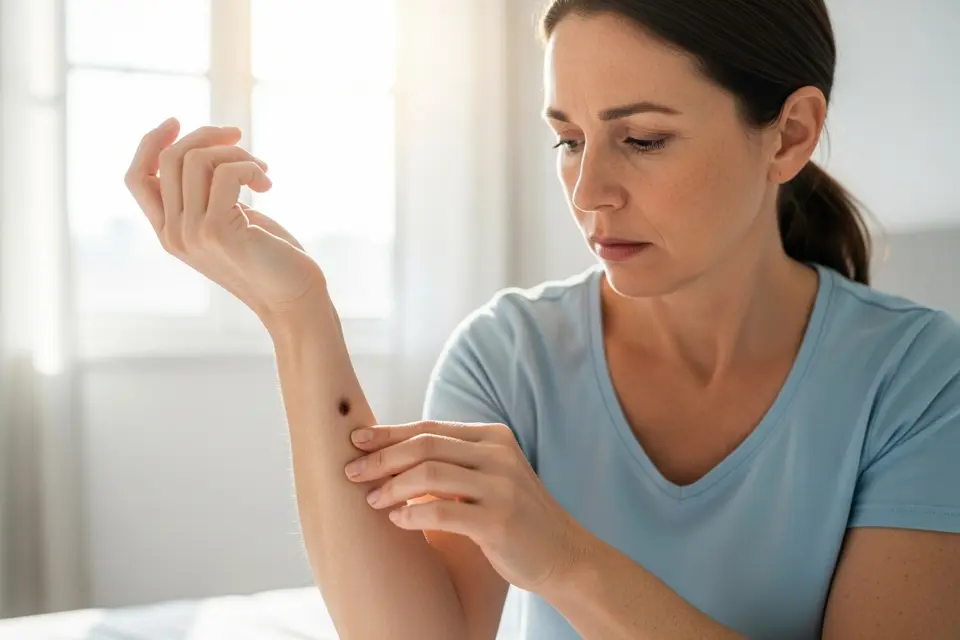
Photograph suspicious spots to track their evolution over time.
Keep a record of any symptoms, including when itching started and whether it has intensified.
Frequently Asked Questions
Many moles itch occasionally due to friction from clothing, dry skin, or minor irritation. An itch that resolves quickly and does not recur is usually harmless. Persistent itching lasting more than two weeks, especially when combined with visible changes, requires professional evaluation.
Do not wait longer than four weeks if a spot itches continuously without explanation. Seek immediate attention if the spot bleeds, changes rapidly, or develops multiple warning signs simultaneously.
No. The majority of skin cancers do not cause itching. Visual changes remain the most common first sign. Relying solely on itching to identify skin cancer would miss most cases.
Scratching does not cause cancer to spread through the body. Aggressive scratching can damage the skin surface and make evaluation more difficult, so avoid picking at suspicious lesions before a dermatologist appointment.
The Bottom Line
Itching can signal skin cancer, but it requires evaluation alongside other symptoms to determine its significance. The ABCDEs of melanoma, the ugly duckling sign, and persistent non-healing sores provide more reliable warning signs than itching alone.
If you notice a persistent itch combined with visible changes in a mole or spot, visit Doctronic.ai for AI-powered consultations and affordable telehealth visits to assess concerning skin symptoms promptly.
Related articles
Explore treatment options
Chat Now