

7 Common and Serious Side Effects of Airsupra
Meta Description: Learn about the 7 common and serious side effects of Airsupra and how to manage risks like oral thrush or heart issues through proper inhaler [...]
Read MoreScoliosis can contribute to back pain, as the spinal curvature creates mechanical stress that often leads to discomfort through muscle strain, joint irritation, and nerve compression.
Studies show that about 35–45% of adolescents with scoliosis and approximately 60% of adults with the condition experience back pain, making it a common concern.
Pain severity depends on factors like curve size, age, degenerative changes, and daily postural habits.
Non-surgical treatments, including physical therapy, core strengthening, and the Schroth Method, help most people manage symptoms effectively.
Doctronic.ai offers free AI doctor visits and affordable telehealth consultations to help people understand their symptoms and get personalized guidance.
Many people wonder: Does scoliosis cause back pain? The short answer is complicated. While scoliosis itself does not always cause pain, the spinal curvature can contribute to discomfort by placing mechanical stress on muscles, joints, and nerves. The curve creates a mechanical problem that puts extra stress on muscles, joints, and nerves. This stress is what actually produces discomfort.
Scoliosis itself doesn't directly cause pain, but it creates a mechanical disadvantage that can lead to joint irritation, disc degeneration, and nerve pinching. This explains why some people with significant curves feel fine while others with mild curves struggle daily.
A study of adults aged 20 to 65 found that about 60% of people with scoliosis reported back pain, compared with about 30% of those without the condition.
Teenagers with scoliosis often hear that their condition should not hurt. This outdated belief has been proven wrong. About 35–45% of newly diagnosed adolescent idiopathic scoliosis patients experience back pain. That is nearly half of all young patients.
Adult-onset scoliosis, also called degenerative scoliosis, typically causes more pain. This type develops later in life as spinal discs and joints wear down. The combination of curve development and age-related degeneration creates a double problem for the spine.
A scoliotic spine does not just bend to the side. It also rotates, twisting the vertebrae and ribs. This rotation throws off the body's natural balance. Muscles on one side work harder than the other. Joints get compressed unevenly. The body constantly tries to compensate, which leads to fatigue and strain.
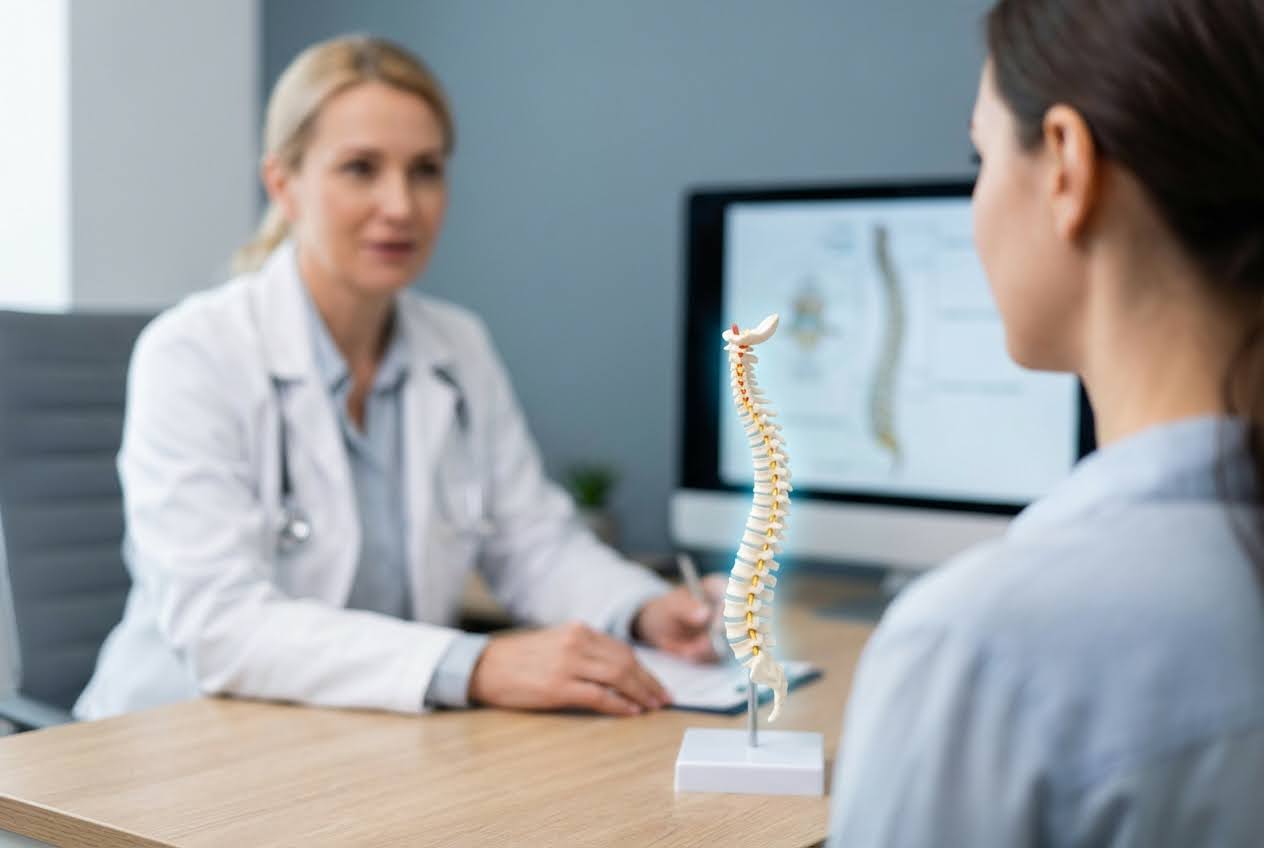 Common Sources of Scoliosis-Related Discomfort
Understanding the source of pain helps people find the right treatment. Scoliosis can cause multiple distinct pain sources throughout the back.
The most common source of scoliosis pain is muscle fatigue. When the spine curves, muscles on the convex side stretch too long while muscles on the concave side stay shortened. Both situations cause problems. Stretched muscles work overtime trying to pull the spine straight. Shortened muscles become tight and prone to spasms.
Facet joints connect vertebrae and allow the spine to bend and twist. In scoliosis, these joints bear uneven loads. Some get compressed while others gap open. This uneven stress accelerates wear and tear, leading to arthritis. Facet joint pain typically feels sharp and localized, often worsening with certain movements.
As curves progress, the spinal canal can narrow in certain areas. This narrowing may pinch nerves, causing pain that shoots down the legs. Sciatica - pain along the sciatic nerve - is common in lumbar scoliosis. People describe these sensations as burning, tingling, or electric shock.
Spinal discs act as cushions between vertebrae. Scoliosis puts uneven pressure on these discs, causing them to break down faster on one side. Degenerated discs lose their ability to absorb shock and may bulge or herniate, creating additional pain sources.
Not everyone with scoliosis experiences the same level of discomfort. Several factors determine how much pain a person might feel.
Doctors measure scoliosis curves using the Cobb angle. Curves under 25 degrees are considered mild, while curves over 40 degrees are severe. Generally, larger curves create greater mechanical stress and a higher risk of pain. But curve size alone does not predict pain - some people with large curves feel fine, while others with small curves hurt significantly.
Pain tends to increase with age in patients with scoliosis. Young spines can compensate for abnormal curves more easily. As people age, discs lose water content, joints develop arthritis, and muscles weaken. These changes compound the mechanical problems caused by scoliosis.
Daily habits matter enormously. Sitting hunched over a computer for hours worsens muscle imbalances. Carrying heavy bags on one shoulder adds strain. Lack of exercise allows supporting muscles to weaken. Active people who maintain good posture typically experience less pain than sedentary individuals.
Most people with scoliosis-related back pain can find relief without surgery. The key is addressing the mechanical problems the curve creates.
Physical therapy remains the gold standard for scoliosis management. The Schroth Method, developed specifically for scoliosis, uses customized exercises to elongate the spine and strengthen weakened muscles. Trained therapists teach patients breathing techniques and postural corrections they can practice daily.
Strong core muscles support the spine and reduce strain on other structures. Exercises targeting the abdominals, back extensors, and hip muscles help stabilize the spine. Flexibility work addresses tight muscles that contribute to pain. Swimming, yoga, and Pilates are excellent options for many scoliosis patients.
Over-the-counter pain relievers help manage flare-ups. Heat and ice therapy provide temporary relief. For adolescents with progressing curves, bracing may slow curve advancement and reduce pain. Adults sometimes use braces for support during activities.
For personalized guidance on managing scoliosis symptoms, Doctronic.ai offers free AI doctor consultations that can help identify appropriate next steps and treatment options.
Surgery is generally considered when spinal curves exceed 45–50 degrees, when pain or function cannot be managed conservatively, or when nerve compression causes significant neurological symptoms such as weakness or loss of sensation. Spinal fusion surgery straightens and stabilizes the spine using rods and screws. Modern techniques produce excellent outcomes, though surgery is reserved for cases where other approaches fail.
Most people with scoliosis lead full, active lives with proper management. The condition requires ongoing attention, but pain can be controlled. Regular exercise, good posture habits, and early intervention for flare-ups make the biggest difference.
If scoliosis pain is affecting daily life, getting expert guidance matters. Doctronic provides instant access to AI-powered medical consultations and affordable telehealth visits with licensed doctors in all 50 states. Understanding symptoms is the first step toward effective treatment.
Yes. Curve size does not always predict pain levels. Some people with curves under 20 degrees experience considerable discomfort due to muscle imbalances and joint stress. Individual factors like activity level, posture, and muscle strength influence pain more than curve measurements alone.
Pain often increases with age because degenerative changes compound the mechanical problems caused by scoliosis. Disc degeneration, arthritis, and muscle weakness all contribute. Staying active and maintaining core strength can slow this progression significantly.
Scoliosis pain varies depending on its source. Muscle fatigue creates dull, aching pain that worsens throughout the day. Facet joint irritation causes sharp, localized pain. Nerve compression produces burning or shooting sensations that may travel down the legs.
The wrong exercises can aggravate symptoms, but appropriate exercise typically reduces pain. High-impact activities or exercises that load the spine unevenly may cause problems. Working with a physical therapist familiar with scoliosis ensures exercise programs help rather than harm.
Scoliosis can lead to back pain by placing uneven mechanical stress on muscles, joints, and nerves, though the severity varies widely from person to person. Most individuals improve with targeted exercise, physical therapy, and posture changes rather than surgery. For personalized guidance, Doctronic.ai offers free AI doctor visits and telehealth consultations to help you understand symptoms and next steps.
Meta Description: Learn about the 7 common and serious side effects of Airsupra and how to manage risks like oral thrush or heart issues through proper inhaler [...]
Read MoreMeta Description: Learn about 8 budesonide interactions and what to avoid when you’re taking budesonide, including grapefruit and common drugs, to ensure your treatment is [...]
Read MoreMeta Description: Learn about these 7 Xolair interactions and what to avoid when you’re taking Xolair to safely manage your asthma, chronic hives, or nasal polyp [...]
Read More