Back Pain Radiating Down the Leg: Causes and Treatment
Key Takeaways
Back pain that travels down the leg often signals nerve involvement, not just a muscle issue
Approximately 2% of people develop sciatica each year, making it a common but treatable condition
Spinal causes like herniated discs and stenosis are the most frequent culprits
Non-spinal conditions, such as piriformis syndrome, can mimic sciatica symptoms
Most cases improve with conservative treatment within 6-12 weeks
Red flag symptoms like bladder dysfunction require immediate medical attention
Understanding Back Pain That Travels Down the Leg
That sharp, burning pain shooting from your lower back down through your buttock and leg isn't something to ignore. When back pain radiates down the leg, it typically means a nerve is being compressed or irritated somewhere along its path. This type of pain affects millions of people annually, with approximately 2% developing sciatica each year. Understanding the causes and treatment options can help you get relief faster and avoid unnecessary suffering. Doctronic.ai offers AI-powered consultations that can help identify whether your symptoms warrant immediate attention or can be managed conservatively at home.
Sciatica and Nerve Root Compression
How Radiculopathy Differs from Localized Back Pain
Localized back pain stays in one spot. Radiculopathy travels. When a nerve root gets pinched or inflamed, pain follows that nerve's pathway down the leg. You might feel tingling, numbness, or weakness along with the pain. This traveling pattern is the key difference that separates nerve-related pain from simple muscle strain.
Defining the Path of the Sciatic Nerve
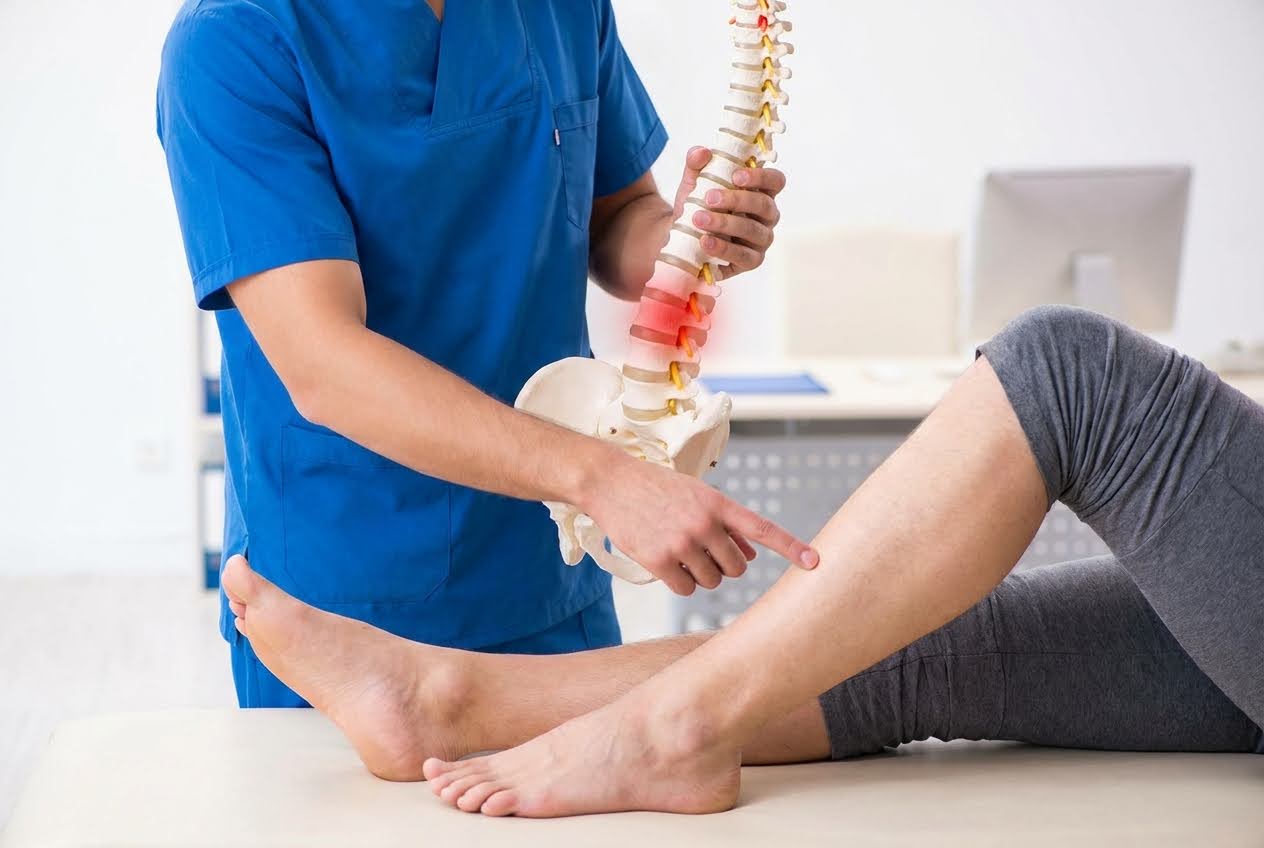
The sciatic nerve is the largest nerve in your body. It starts from nerve roots in your lower spine (L4 through S3), runs through your buttocks, and extends down the back of each leg to your feet. When this nerve gets compressed, you feel it everywhere along its path. Some people describe it as an electric shock or burning sensation that makes sitting unbearable.
Common Spinal Causes of Radiating Leg Pain
Lumbar Herniated Discs
A herniated disc happens when the soft inner material of a spinal disc pushes through its outer layer. This bulging material can press directly on nerve roots. The L4-L5 and L5-S1 levels are the most common locations for herniation. Symptoms often worsen with sitting, bending, or coughing.
Spinal Stenosis and Narrowing of the Canal
Spinal stenosis occurs when the spinal canal narrows, squeezing the nerves inside. This condition typically develops after age 50 due to arthritic changes. Walking becomes painful, but leaning forward or sitting provides relief. This "shopping cart sign", where people feel better leaning on a cart, is a telltale indicator.
Spondylolisthesis and Vertebral Slippage
When one vertebra slips forward over the one below it, nerve compression can result. This slippage ranges from mild to severe. Athletes who repeatedly hyperextend their spines, like gymnasts and football linemen, face a higher risk. The instability creates ongoing irritation of nerve roots.
Degenerative Disc Disease
Discs lose water content and height as we age. This degeneration reduces the space available for nerve roots to exit the spine. The condition doesn't always cause symptoms, but when it does, the pain can be significant. Bone spurs often form alongside disc degeneration, adding to nerve compression.
Non-Spinal Conditions Mimicking Sciatica
Piriformis Syndrome
The piriformis muscle sits deep in the buttock, and the sciatic nerve runs beneath it (or sometimes through it). When this muscle spasms or tightens, it can compress the sciatic nerve. Piriformis syndrome often affects runners and people who sit for extended periods. The pain pattern mimics true sciatica but originates outside the spine.
Sacroiliac (SI) Joint Dysfunction
The SI joint connects your spine to your pelvis. When this joint becomes inflamed or moves abnormally, it can refer pain down the leg. SI joint problems often occur after pregnancy, trauma, or leg length differences. The pain typically stays above the knee, unlike true sciatica.
Diagnostic Methods and Red Flag Symptoms
Physical Exams and Neurological Testing
A proper diagnosis starts with a thorough physical exam. The straight leg raise test, where lifting your extended leg reproduces leg pain, strongly suggests nerve root involvement. Doctors also check reflexes, muscle strength, and sensation. These tests help pinpoint which nerve level is affected.
Imaging: X-rays, MRIs, and CT Scans
X-rays show bone structure but miss soft tissue problems. MRI remains the gold standard for visualizing disc herniations, nerve compression, and spinal stenosis. CT scans provide excellent bone detail and are suitable for patients who cannot undergo MRIs. Doctronic.ai can help you understand whether imaging is necessary based on your specific symptoms.
Identifying Emergency Symptoms like Cauda Equina
Cauda equina syndrome is a medical emergency. Warning signs include sudden bladder or bowel dysfunction, numbness in the groin area (saddle anesthesia), and rapidly progressive leg weakness. This condition requires immediate surgery to prevent permanent damage. Go to an emergency room if you experience these symptoms.
Conservative Treatment and Home Management
Physical Therapy and Targeted Stretching
Physical therapy is the cornerstone of conservative treatment. Specific exercises can reduce nerve tension, strengthen supporting muscles, and improve mobility. Chiropractic care may provide short-term relief for some sciatica patients.
Pharmacological Options: NSAIDs and Muscle Relaxants
Over-the-counter NSAIDs like ibuprofen reduce inflammation around irritated nerves. Muscle relaxants can help when muscle spasm contributes to the problem. Short-term oral steroids sometimes provide rapid relief during acute flare-ups. Prescription medications should be discussed with a healthcare provider.
Heat and Ice Therapy Protocols
Ice works best during the first 48-72 hours of acute pain, reducing inflammation. After that, heat often provides more relief by relaxing tight muscles and improving blood flow. Alternate between the two based on what feels better. Apply for 15-20 minutes at a time with a barrier between the skin and the heat or ice source.
Advanced Medical Interventions and Surgery
Epidural Steroid Injections
When conservative measures fail, epidural steroid injections deliver anti-inflammatory medication directly to the irritated nerve. These injections can provide weeks to months of relief. They are most effective for disc herniations and stenosis. Most physicians recommend limiting injections to a few per year, depending on patient response and side-effect risk.
Microdiscectomy and Laminectomy Procedures
Surgery becomes an option when conservative treatment fails after 6-12 weeks or when neurological deficits progress. Microdiscectomy removes the portion of a herniated disc pressing on the nerve. A laminectomy removes bone to create more space in cases of stenosis. Both procedures have high success rates when patients are properly selected.
Preventing Future Episodes of Radiating Pain
Ergonomics and Posture Correction
Poor posture places excessive stress on spinal structures. Set up your workstation so your screen is at eye level and your feet rest flat on the floor. Take breaks every 30-45 minutes to stand and move. When lifting, bend at the knees and keep objects close to your body.
Core Strengthening and Weight Management
Strong core muscles support and protect your spine. Focus on exercises that target the deep stabilizing muscles, not just the superficial abs. Excess body weight increases disc pressure and accelerates degeneration. Even modest weight loss can significantly reduce symptoms and prevent recurrence.
Frequently Asked Questions
Most sciatica episodes improve within 4-6 weeks with conservative treatment. Some cases resolve in days, while others may take up to 12 weeks. Chronic sciatica lasting longer than 12 weeks may require more aggressive intervention.
Yes, many cases of sciatica resolve without medical treatment. The body can reabsorb herniated disc material over time. Staying moderately active, avoiding prolonged sitting, and using over-the-counter pain relievers often help the healing process.
Seek medical attention if pain persists beyond two weeks, if you have progressive weakness, or if symptoms significantly limit your daily activities. Emergency care is needed for sudden bladder or bowel changes, severe numbness in the groin, or rapidly worsening weakness.
Walking is generally beneficial for sciatica when done in moderation. It promotes blood flow, reduces inflammation, and prevents muscle stiffness. Start with short, flat walks and gradually increase distance as symptoms allow.
The Bottom Line
Back pain radiating down the leg signals nerve involvement that deserves proper attention. Most cases respond well to conservative treatment, but knowing when to seek help matters. For quick guidance on your symptoms, Doctronic.ai offers AI-assisted symptom triage and educational guidance that can help you understand your condition and determine the best next steps for treatment.
Understanding Emotional Wellness Through DBTEmotions feel overwhelming when they seem to control every decision. Dialectical Behavior Therapy offers practical techniques for [...]
Getting Skin Care Without the Insurance HeadachesThat suspicious mole has been bothering you for weeks. You want answers from a dermatologist, but a quick call to your [...]
Why Ankles Swell After Physical ActivityFinishing a workout with puffy, tight ankles can be alarming. Most people assume something is wrong, but bloated ankles after exercise [...]


 Diagnostic Methods and Red Flag Symptoms