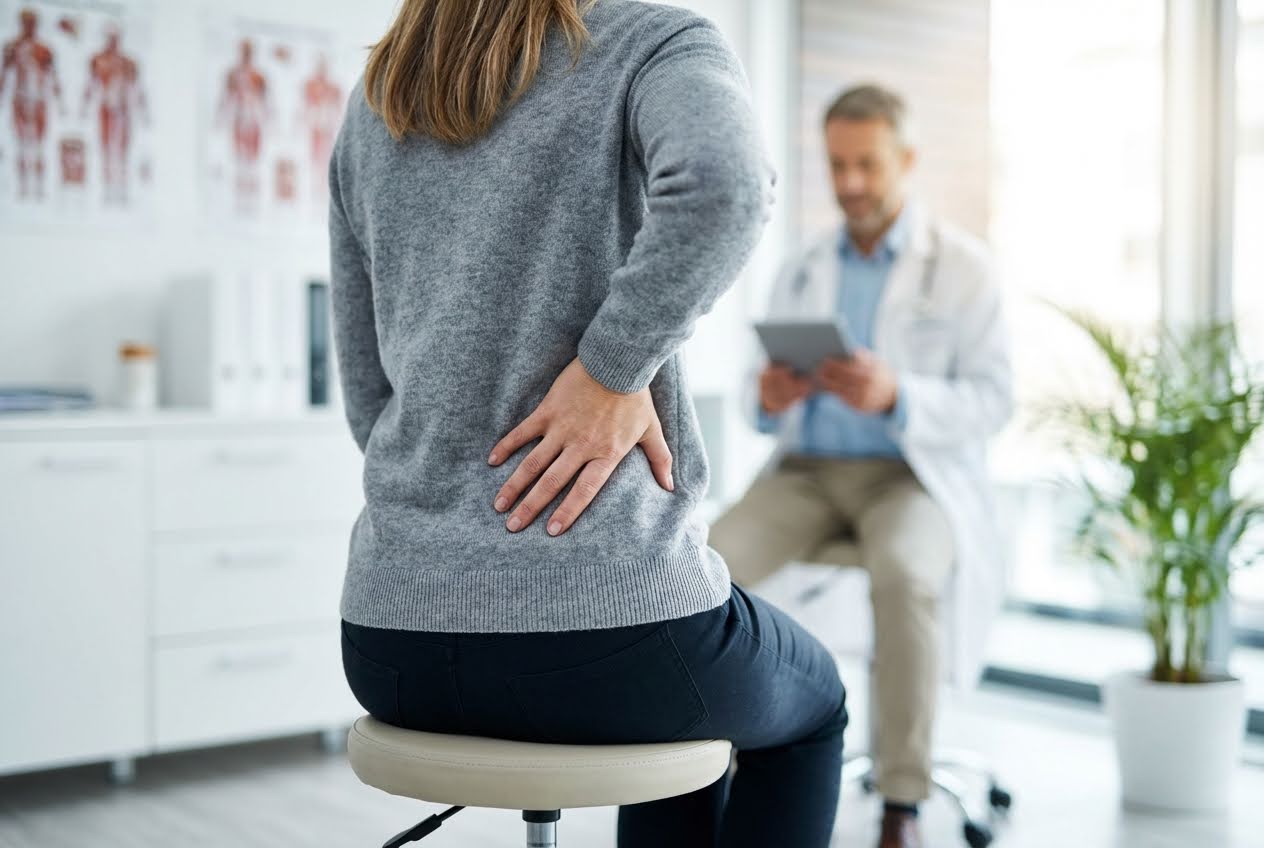
Lower back pain can affect women differently than men due to hormonal changes, reproductive health conditions, and anatomical differences in the pelvis and spine.
Menstrual cycles, endometriosis, pregnancy, and menopause can all contribute to or worsen lower back discomfort.
Certain warning signs require urgent medical evaluation, including loss of bladder or bowel control, fever, unexplained weight loss, or numbness and weakness in the legs.
Pelvic floor dysfunction may contribute to lower back pain in some women, but it represents only a small subset of cases; proper medical evaluation is necessary to determine the underlying cause.
Telehealth consultations and medical evaluations can help patients identify potential causes and determine when in-person care is needed.
Understanding Lower Back Pain Specific to Women
Women experience this pain differently than men, and the reasons go far beyond simple muscle strain. The female body undergoes unique hormonal shifts, structural changes during pregnancy, and conditions tied directly to reproductive health. These factors mean that female lower back pain requires a different diagnostic approach. A woman experiencing chronic discomfort deserves answers tailored to her biology, not generic advice designed for everyone. Understanding the causes helps women recognize when rest and home care will suffice and when symptoms signal something more serious. The goal is simple: know what is happening in your body and take the right action at the right time.
Reproductive Health and Hormonal Causes
Menstrual Cycles and Dysmenorrhea
Monthly hormonal changes directly affect the lower back. During menstruation, the uterus contracts to shed its lining, and these contractions can radiate pain into the lower spine. Dysmenorrhea, or painful periods, affects millions of women and frequently includes back pain as a primary symptom. Prostaglandins, the chemicals that trigger uterine contractions, also cause inflammation in surrounding tissues. This explains why anti-inflammatory medications often provide relief. Women who experience severe monthly back pain should track their symptoms and discuss patterns with a healthcare provider through telehealth services like Doctronic.ai.
Endometriosis and Pelvic Inflammatory Disease
Endometriosis occurs when tissue similar to the uterine lining grows outside the uterus. This tissue can attach to the spine, nerves, or pelvic structures, causing chronic lower back pain that worsens during periods. The condition affects roughly 10% of reproductive-age women and remains underdiagnosed. Pelvic inflammatory disease, an infection of the reproductive organs, also produces lower back pain alongside pelvic discomfort and fever. Both conditions require medical evaluation and treatment, as they can cause long-term complications if ignored.
Pregnancy-Related Structural Changes
Pregnancy transforms the spine. As the baby grows, the center of gravity shifts forward, forcing the lower back to curve more dramatically. Ligaments loosen due to the hormone relaxin, reducing spinal stability. Weight gain adds pressure to already-stressed joints. These changes explain why about half of pregnant women report lower back pain. Most pregnancy-related discomfort resolves after delivery, but women should report severe or sudden pain immediately, as it can sometimes indicate preterm labor or other complications.
Menopause and Estrogen Loss
Estrogen protects bones and maintains spinal disc health. When estrogen levels drop during menopause, women face accelerated bone density loss and disc degeneration. This makes postmenopausal women more vulnerable to fractures, arthritis, and chronic back pain. Clinical practice guidelines often lack specific recommendations for older adults with back pain, who represent a vulnerable population. Women over 50 experiencing new or worsening back pain should pursue evaluation rather than assuming discomfort is simply part of aging.
Musculoskeletal and Lifestyle Triggers
Piriformis Syndrome and Sciatica
The piriformis muscle sits deep in the buttocks, and when it spasms or tightens, it can compress the sciatic nerve. This produces sharp pain that shoots from the lower back down through the leg. Women develop piriformis syndrome more frequently than men due to differences in pelvic anatomy. Sciatica describes any irritation of the sciatic nerve, whether from a herniated disc, bone spur, or muscle compression. The pain typically affects one side and may include tingling, numbness, or weakness in the affected leg.
Sacroiliac (SI) Joint Dysfunction
The SI joints connect the spine to the pelvis and absorb shock during movement. Pregnancy, trauma, or arthritis can destabilize these joints, causing pain in the lower back and buttocks. Women are particularly susceptible because hormonal changes during menstruation and pregnancy affect joint laxity. SI joint pain often worsens when standing from a seated position, climbing stairs, or lying on the affected side. Physical therapy targeting joint stabilization provides significant relief for most women.
Postural Strain and Footwear Choices
Poor posture places enormous stress on the lower spine. Sitting for extended periods, hunching over phones or computers, and sleeping in awkward positions all contribute to chronic strain. The muscles supporting the spine fatigue, leading to pain and stiffness. High heels deserve special mention. Heels shift the pelvis forward and increase the curve of the lower spine, compressing joints and straining muscles. Women who wear heels regularly often develop chronic back problems that improve dramatically when switching to supportive footwear.
When to Worry: Red Flags and Warning Signs
Most episodes of lower back pain improve with rest, activity modification, and conservative treatment. However, certain symptoms can signal a more serious underlying condition and require prompt medical evaluation.
Recognizing these warning signs helps ensure that potentially serious spinal or systemic conditions are identified early.
Neurological Symptoms and Loss of Control
Sudden loss of bladder or bowel control accompanied by back pain is a medical emergency. This combination can indicate cauda equina syndrome, a rare but serious condition caused by compression of the nerve roots at the base of the spine.
If untreated, cauda equina syndrome can lead to permanent nerve damage and loss of function.
Other neurological symptoms that require urgent evaluation include:
Numbness in the groin or inner thighs (saddle anesthesia)
Progressive weakness in the legs
Difficulty walking or maintaining balance
Severe numbness or tingling in the lower body
These symptoms may indicate significant nerve compression or spinal injury and should be evaluated immediately.
Fever and Unexplained Weight Loss
Back pain accompanied by fever or chills may signal an infection affecting the spine or surrounding tissues.
Although spinal infections are uncommon, conditions such as vertebral osteomyelitis or spinal epidural abscess require prompt treatment to prevent complications.
Similarly, unexplained weight loss combined with persistent back pain may indicate a more serious underlying condition that requires thorough medical investigation.
Pain That Does Not Improve With Rest
Most cases of lower back pain are caused by muscle strain, ligament injury, or poor posture, and typically improve within a few weeks.
Medical evaluation is recommended if:
Pain persists longer than six weeks despite rest and conservative care
Pain continues to worsen instead of improving
Pain occurs at night or disrupts sleep
Night pain that wakes a person from sleep can sometimes indicate a cause other than simple muscle strain.
Women experiencing persistent or worsening symptoms should seek medical guidance rather than assuming the pain will resolve on its own.
Diagnostic Tools and Seeking Professional Help
Accurate diagnosis begins with a thorough history and physical examination. Doctors assess range of motion, nerve function, and specific pain patterns. Imaging studies like X-rays, MRI, or CT scans may follow if the initial evaluation suggests structural problems. Doctronic.ai provides an accessible first step for women wondering whether their symptoms require professional evaluation. The AI-powered system helps identify potential causes and determine urgency, with affordable telehealth visits available 24/7 for those needing a physician consultation.
Home Management and Prevention Strategies
Gentle stretching and strengthening exercises provide the foundation for back health. Core muscles support the spine, and targeted exercises reduce strain on vertebrae and discs. Walking, swimming, and yoga offer low-impact options that maintain mobility without aggravating pain. Heat and ice both have roles in managing acute flare-ups. Ice reduces inflammation during the first 48 hours, while heat relaxes tight muscles afterward. Over-the-counter anti-inflammatory medications help many women manage discomfort during recovery. Ergonomic adjustments matter significantly. Supportive chairs, properly positioned computer screens, and regular movement breaks prevent postural strain. Sleeping with a pillow between the knees keeps the spine aligned and reduces pressure on the lower back.
Frequently Asked Questions
Prostaglandins released during menstruation cause uterine contractions that can radiate pain to the lower back. Hormonal shifts also increase inflammation and affect ligament laxity, contributing to premenstrual discomfort.
Yes. Endometrial tissue can grow on structures near the spine, including nerves and ligaments. This causes chronic pain that typically worsens during menstruation and may persist throughout the month.
Seek immediate care for loss of bladder or bowel control, leg weakness, fever, or numbness. Schedule an appointment if pain persists beyond six weeks, worsens at night, or follows trauma.
Declining estrogen levels accelerate bone loss and disc degeneration. Many women experience increased back pain after menopause due to these structural changes and should discuss preventive strategies with their healthcare provider.
Regular exercise, good posture, supportive footwear, and maintaining a healthy weight all protect the spine. Avoiding prolonged sitting and using proper lifting techniques reduces strain on the lower back.
The Bottom Line
Female lower back pain stems from causes unique to women's bodies, including hormonal changes, reproductive conditions, and anatomical differences. Recognizing red flag symptoms and seeking appropriate evaluation through Doctronic.ai helps women get answers and relief faster.
Understanding Emotional Wellness Through DBTEmotions feel overwhelming when they seem to control every decision. Dialectical Behavior Therapy offers practical techniques for [...]
Getting Skin Care Without the Insurance HeadachesThat suspicious mole has been bothering you for weeks. You want answers from a dermatologist, but a quick call to your [...]
Why Ankles Swell After Physical ActivityFinishing a workout with puffy, tight ankles can be alarming. Most people assume something is wrong, but bloated ankles after exercise [...]



 When to Worry: Red Flags and Warning Signs