Simple self-tests like the wall test can help identify posture problems before they worsen
Corrective exercises targeting deep neck muscles and chest stretches can reverse the condition
Workspace adjustments and mindful habits prevent recurrence
Why Forward Head Posture Causes Chronic Pain and Fatigue
Your head weighs about 10-12 pounds when balanced directly over your spine. Shift it forward just two inches, and your neck muscles suddenly support what feels like 24 pounds of pressure. This mechanical reality explains why so many people experience chronic neck pain, headaches, and fatigue without understanding the root cause. Forward head posture is increasingly common, with prevalence rates ranging from 48% to 62%, depending on measurement method. The condition develops gradually, often going unnoticed until pain becomes constant. Understanding what forward head posture actually involves is the first step toward fixing it.
Defining Forward Head Posture and Its Mechanics
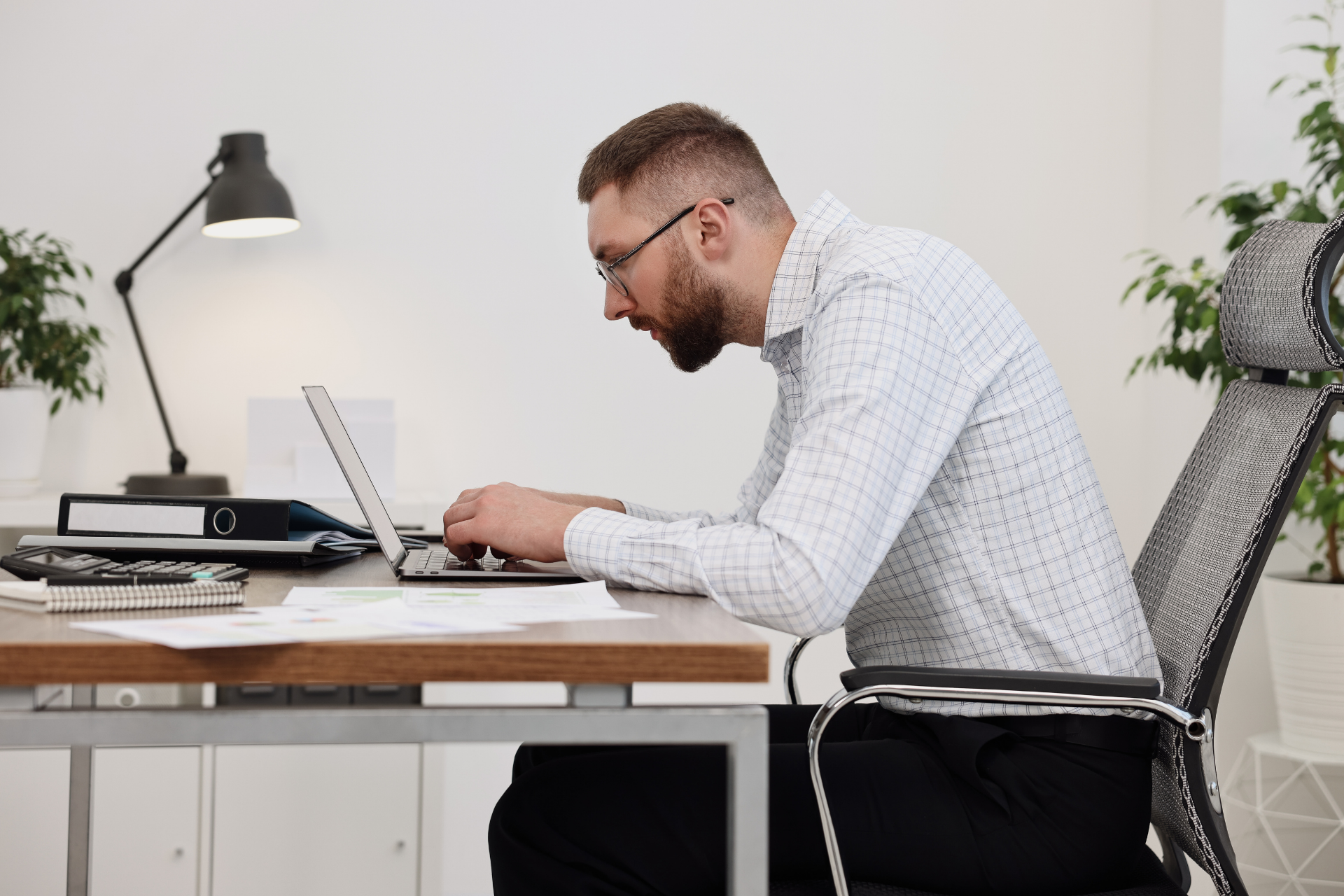
Forward head posture describes a position where the head sits in front of the body's center of gravity rather than directly above the shoulders. This misalignment creates a cascade of compensations throughout the neck, upper back, and shoulders.
The Anatomy of the Cervical Spine
The cervical spine consists of seven vertebrae designed to support the head while allowing movement in multiple directions. Between each vertebra sit discs that absorb shock and prevent bone-on-bone contact. When the head moves forward, these structures experience uneven loading. The posterior neck muscles work overtime to prevent the head from falling further forward, while the anterior neck muscles weaken and elongate.
Understanding the 'Text Neck' Phenomenon
Text neck refers specifically to forward head posture caused by looking down at devices. Using a smartphone for 7 hours or more per day increases neck pain by approximately 40%. The average person tilts their head 45-60 degrees when texting, multiplying the effective weight the neck must support.
Biomechanical Impact on Weight Distribution
Every inch the head moves forward adds roughly 10 to 12 pounds of perceived weight to the cervical spine. At three inches forward, neck muscles strain to support what feels like 36 pounds. This constant load causes muscle fatigue, joint compression, and eventual structural changes in the spine itself.
Common Causes and Modern Risk Factors
Multiple factors contribute to the development of forward head posture, though modern technology and sedentary work have dramatically accelerated the problem.
Ergonomics in the Digital Workspace
Poor desk setup remains the primary culprit for office workers. Monitors positioned too low force the chin to drop and the head to shift forward. Laptops create an even worse scenario: the screen and keyboard cannot both be at proper heights simultaneously. Doctronic.ai frequently helps patients identify these ergonomic issues during virtual consultations.
Sedentary Lifestyle and Muscle Weakness
Sitting for extended periods weakens the muscles responsible for holding the head upright. The deep cervical flexors at the front of the neck lose strength, while the upper trapezius and levator scapulae become chronically tight. This imbalance pulls the head progressively forward over time.
Psychological Stress and Physical Tension
Stress manifests physically through shoulder elevation and forward head positioning. People under chronic stress unconsciously adopt protective postures that round the shoulders and push the head forward. Breaking this pattern requires addressing both physical and psychological components.
Symptoms and Long-Term Health Consequences
The effects of forward head posture extend far beyond neck discomfort. FHP increases neck stress, contributing to headaches, cervical pain, and reduced neck mobility while potentially influencing mood and physical health.
Chronic Neck and Shoulder Pain
Constant muscle strain creates trigger points: tender knots that refer pain to surrounding areas. The upper trapezius, levator scapulae, and suboccipital muscles become particularly problematic, creating a persistent ache across the neck and shoulders.
Tension Headaches and Jaw Dysfunction
Suboccipital muscle tightness commonly triggers tension headaches that wrap around the head from back to front. Forward head posture also changes jaw alignment, contributing to temporomandibular joint dysfunction, teeth grinding, and facial pain.
Reduced Respiratory Capacity
A forward head position rounds the upper back and compresses the chest cavity. This restriction reduces lung capacity by up to 10–15%, affecting energy levels and exercise tolerance. Many people with chronic fatigue find their breathing mechanics compromised by poor posture.
Methods for Self-Assessment and Diagnosis
Identifying forward head posture early allows for faster correction. Two simple methods provide reliable results at home.
The Wall Test for Alignment
Stand with heels, buttocks, and shoulder blades touching a wall. Relax completely. If the back of the head naturally touches the wall without straining, alignment is acceptable. If there is a gap or effort is required to make contact, forward head posture exists. The size of the gap indicates severity.
Photographic Posture Analysis
Have someone photograph your profile while standing naturally. Draw a vertical line from the earlobe down. In proper alignment, this line passes through the shoulder joint. If the ear sits forward of the shoulder, correction is needed. Doctronic.ai can help interpret these findings and recommend appropriate next steps.
Corrective Exercises and Stretching Routines
Reversing forward head posture requires strengthening weak muscles and stretching tight ones. Consistency matters more than intensity.
Strengthening Deep Cervical Flexors
Chin tucks target the deep neck flexors that pull the head back into alignment. Lie face-up and gently draw the chin toward the throat to create a double chin. Hold for 10 seconds, repeat 10 times. Progress to performing these seated, then standing.
Stretching the Pectorals and Upper Trapezius
Tight chest muscles pull shoulders forward, worsening head position. Stand in a doorway with forearms on the frame and lean through gently. For the upper trapezius, tilt the ear toward the shoulder while keeping the shoulders level and hold for 30 seconds per side.
Thoracic Spine Mobility Drills
A stiff upper back locks the head into forward positioning. Foam rolling the thoracic spine and performing cat-cow stretches restores the extension needed for proper head alignment. Aim for 5 minutes daily of thoracic mobility work.
Sustainable Lifestyle Adjustments for Prevention
Exercises correct existing problems, but environmental changes prevent recurrence.
Optimizing Your Desk Setup
Position monitors at eye level with the top of the screen at or slightly below eye height. Keep screens at an arm's length distance. Use a separate keyboard and mouse with laptops, elevating the screen to the proper height. Consider a standing desk option for part of the workday.
Mindful Habit Formation and Posture Cues
Set hourly reminders to check posture throughout the day. Place visual cues: a sticky note on the monitor or a specific object that triggers a posture check when noticed. The goal is to make good posture automatic rather than requiring constant attention. Doctronic.ai offers personalized guidance for building these habits into daily routines.
Frequently Asked Questions
Most people notice improvement within 4-6 weeks of consistent exercise and ergonomic changes. Complete correction typically takes 3-6 months depending on severity and commitment to the program.
Yes, in most cases. Unless structural changes have occurred in the spine from decades of poor positioning, the condition responds well to targeted exercises and lifestyle modifications.
Consult a healthcare provider if experiencing numbness, tingling, or weakness in the arms, or if pain persists despite corrective efforts. These symptoms may indicate nerve involvement requiring professional evaluation.
Absolutely. Sleeping with too many pillows or on the stomach forces the neck into poor positions for hours nightly. A single pillow that keeps the head neutral works best for most people.
The Bottom Line
Forward head posture develops gradually from modern habits but responds well to targeted correction. Consistent exercises, proper workspace setup, and mindful positioning can reverse the condition and eliminate associated pain. For personalized guidance on posture correction and related health concerns, visit Doctronic.ai for free AI doctor consultations or affordable telehealth visits with licensed physicians available 24/7.
That "just one more episode" promise rarely stops at one. Before you know it, three hours have passed, it's after midnight, and you're wide awake despite [...]
The Monday after we "spring forward" for daylight saving time isn't just another sleepy morning at the office. Research shows it's one of the most [...]
Understanding Airsupra Side EffectsAirsupra is a prescription inhaler used as a rescue medication to relieve asthma symptoms in adults aged 18 years and older. It is not [...]


 Common Causes and Modern Risk Factors